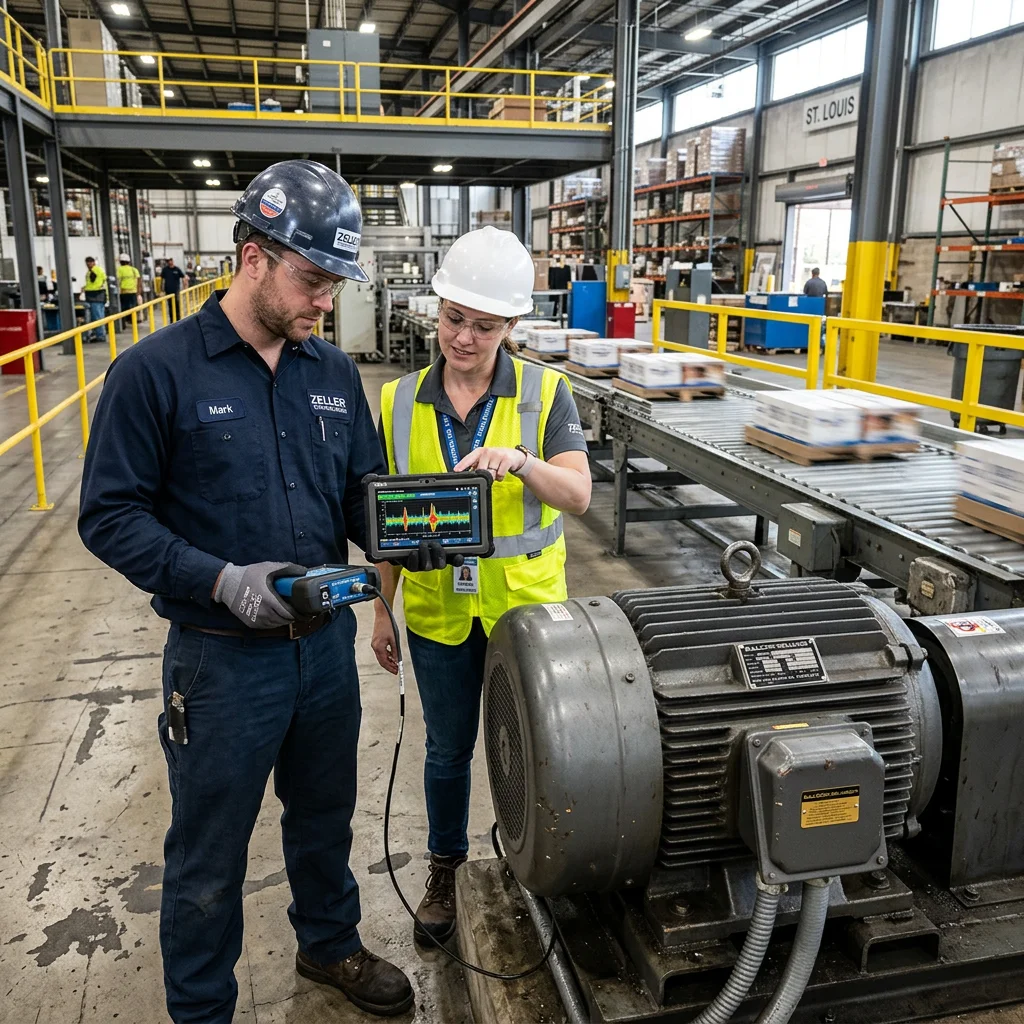
Suppose you’re responsible for a plant in the St. Louis area, you already know this: when a critical motor fails, it’s not “just maintenance,” it’s production, safety, and customer commitments on the line.
Electric motors drive pumps, conveyors, fans, mixers, blowers, compressors, and more. In U.S. manufacturing, these motor-driven systems consume over half of industrial electricity, making them one of the most important levers for reliability and cost control.
That’s why the moment a line-shaft motor trips on overload, a furnace blower seizes, or a critical pump motor starts to smell “hot,” plant managers and reliability engineers go looking fast for industrial motor repair in St. Louis, MO (yes, even if someone typed “industrial motor repair st loius mo” into the search bar in a hurry).
This article is written for:
- Plant managers & operations leaders who must protect throughput and delivery dates.
- Maintenance & reliability engineers who manage MTBF, PM programs, and root-cause analyses.
- EHS/compliance professionals who must ensure OSHA- and NFPA-compliant electrical work.
- Procurement teams that balance cost, risk, and vendor performance.
We’ll unpack why local expertise matters, how to evaluate your options, and how to build an implementation playbook with Zeller Technologies as your St. Louis-based partner.
The St. Louis Context for Industrial Motor Repair
In this context, we’re talking about:
- Asset type: Industrial AC and DC motors, typically 5 to 1,000 HP, driving fans, pumps, conveyors, mixers, hoists, and process equipment.
- Environment: Steel mills, food and beverage plants, chemical and petrochem facilities, packaging, automotive, and warehouses across the greater St. Louis metro.
- Duty class: Continuous or near continuous duty, frequent starts/stops, sometimes variable frequency drive (VFD) controlled, often with high ambient temperatures or contamination.
Scale: Motors whose unexpected failure can stop a line, a furnace, or an entire production cell.
The Single Most Important Business Outcome
For most St. Louis manufacturers, the #1 outcome is:
Cut unplanned motor-related downtime on critical assets by 30 to 50% over the next 12 to 18 months, while maintaining compliance and safety.
Local experts like Zeller Technologies, based in St. Louis and specializing in industrial motors, cranes, hoists, and controls, exist precisely to support that goal.
Terminology & Entities Mapped from the Keywords
Here are the key terms you’ll see and why they matter in this context:
- Industrial Motor Repair (St. Louis, MO)
End to end service for AC/DC motors used in production, including teardown, failure analysis, rewinding, machining, and testing done locally for faster turnaround. - AC & DC Motors
Most plant assets are AC induction motors; some legacy or specialty applications still use DC. Your repair partner must be comfortable with both technologies and their control schemes. - Motor Rewinding
Replacing stator windings with correct wire gauge, turns, and insulation system, preserving or improving efficiency instead of simply “getting it running.” - Vibration Analysis
Detects misalignment, imbalance, bearing wear, and resonance before catastrophic failure, core to predictive maintenance in motor-driven systems. - Infrared (IR) Thermography
Uses thermal imaging to spot hot spots in windings, terminations, and connections, catching loose lugs and overload conditions early. - Predictive Maintenance
A structured program using vibration, IR, electrical testing, and trend analysis to predict when motors will fail, not just react once they do. - Authorized Service Center
A repair shop that major OEMs trust with their warranty work and specifications, indicating trained staff, proper tooling, and documented processes status Zeller holds status for many leading brands. - Emergency Motor Repair
24/7 response, pickup, expedited repair, and reinstallation when a motor failure stops production, critical if your plant runs nights and weekends.
Common Industrial Motor Issues That Require Local Repair in St. Louis
When someone Googles “industrial motor repair St Louis, MO,” they’re usually dealing with one of these real world triggers:
- Motor Trips Repeatedly on Overload or Overcurrent
- Likely root causes: Mechanical binding, process overload, single phasing, insulation breakdown, or VFD parameter issues.
- Immediate triage: Lock out/tag out the circuit, verify insulation resistance and terminal tightness safely, and log trip codes before attempting resets.
- Bearings Running Hot or Noisy
- Likely root causes: Misalignment, imbalance, lubrication failure, bearing wear, or contamination.
- Immediate triage: Use a contact thermometer or IR camera to measure bearing temperature and schedule vibration analysis before the bearing seizes.
- Noticeable Drop in Line Throughput
- Likely root causes: Motor not reaching full speed/torque, slipping belts, voltage imbalance, or drive issues.
- Immediate triage: Check voltage and current balance phase-to-phase, inspect mechanical couplings, and capture baseline vibration and speed data.
- Smell of “Burnt” Insulation or Discoloration on Motor Housing
- Likely root causes: Thermal overload from blocked ventilation, overload, phase loss, or insulation failure.
- Immediate triage: Remove from service, perform IR scan on terminations, and plan for shop teardown and electrical testing.
- Unexpected Motor Failure on a Redundant System
- Likely root causes: Backup motor never truly tested under full load, shared failure modes (same contamination, same alignment issues), or controls misconfiguration.
- Immediate triage: Validate backup capacity under realistic load, then engage a local partner for failure analysis and predictive maintenance planning.
Key Safety Standards for Industrial Motor Work in the St. Louis region.
Industrial motor work is never “just mechanical.” Effective local experts design their service around key safety standards:
- Lockout/Tagout (LOTO) OSHA 29 CFR 1910.147
- Ensure written energy control procedures, individual locks, and verification of zero energy before starting work.
- Electrical Safety NFPA 70E
- Perform arc-flash risk assessments, use appropriate PPE, and respect shock and arc flash boundaries when working on or near energized parts.
- Proper Rigging & Lifting
- Use rated lifting lugs, spreader bars, and hoists sized for the motor weight; avoid side loading hooks or improvised lifting points.
- Alignment and Soft-Foot Correction
- Precision align couplings and correct base soft foot to reduce vibration and bearing stress, critical for long-term reliability.
- Environmental Controls
- For washdown or corrosive environments, specify correct enclosures (TEFC, XP) and sealing practices to avoid water ingress and early insulation failure.
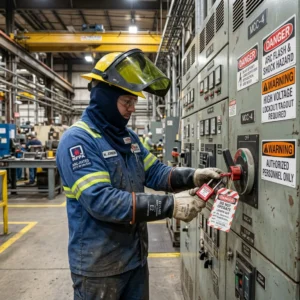 Local St. Louis partners who regularly work in your facilities are more likely to follow your site-specific procedures and integrate them with OSHA and NFPA requirements.
When to Call a Local Motor Repair Specialist:
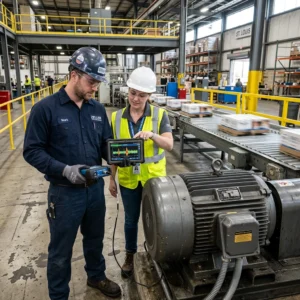 Use these if/then triggers to decide when to engage a local industrial motor repair expert in St. Louis:
- If the same critical motor fails more than twice in 12 to 18 months,
then standardize teardown and failure analysis with a local shop and adjust PM tasks based on findings. - If vibration levels on a critical motor trend above your site limit or OEM recommendation,
then plan repair, balancing, or alignment during the next scheduled outage instead of waiting for failure. - If IR scans show temperature differences >20°C between similar phases or terminations,
then schedule immediate tightening, cleaning, or bus/termination repairs. - If the lead time for a replacement motor exceeds your acceptable downtime threshold,
then prioritize repair/rewind locally and consider adding a spare to your critical inventory. - If you don’t have a documented, local industrial motor repair St. Louis, MO partner, then pre qualify one now before the next emergency.
FAQs: Industrial Motor Repair in St. Louis, MO
1. Why should I choose a local industrial motor repair shop in St. Louis instead of shipping motors out of state?
Local experts reduce response time, understand your industry and utilities, and can visit your site for diagnostics and commissioning, which often cuts downtime and repeat failures versus a purely remote repair model.
2. Can industrial motor repair in St. Louis, MO, be faster than replacing the motor?
For many frame sizes and custom applications, lead times for new motors can be weeks or months, while a local shop can often repair or rewind in days, especially with 24/7 emergency service options.
3. How do I know if a motor should be repaired, rewound, or replaced?
A good repair partner will combine failure analysis, efficiency considerations, and lead times to recommend the best option, supported by test data and cost comparisons, not guesswork.
4. What predictive maintenance services are available for motors in the St. Louis area?
Services include vibration analysis, infrared thermography, motion amplification, and other diagnostics that help you spot problems before motors fail, all available locally through Zeller’s predictive maintenance offerings.
5. Are industrial electric system repairs compliant with OSHA and NFPA safety standards?
They should be. Ensure your partner follows OSHA 1910.147 for lockout/tagout and NFPA 70E guidance for electrical safety, including PPE, arc-flash boundaries, and safe work practices.
6. Does Zeller Technologies only serve St. Louis, or can they support multiple facilities?
Zeller is based in St. Louis but serves a broader regional footprint, making it a strong choice if you want consistent motor repair and predictive maintenance practices across multiple plants.
Schedule Your Industrial Motor Analysis and Repair Today
If your next unplanned motor failure has already happened, you’re behind. The best time to formalize a local industrial motor repair strategy is before the line goes dark.
- Maintenance & reliability:
- Next step: Request a motor failure analysis and repair standard with Zeller’s motor services team so future issues follow a repeatable process.
- Plant managers & EHS/compliance:
- Next step: Schedule a predictive maintenance and safety review (vibration, IR, and safety practices) for your most critical motor-driven assets.
When you’re ready, your local team at Zeller Technologies is one call or click away