
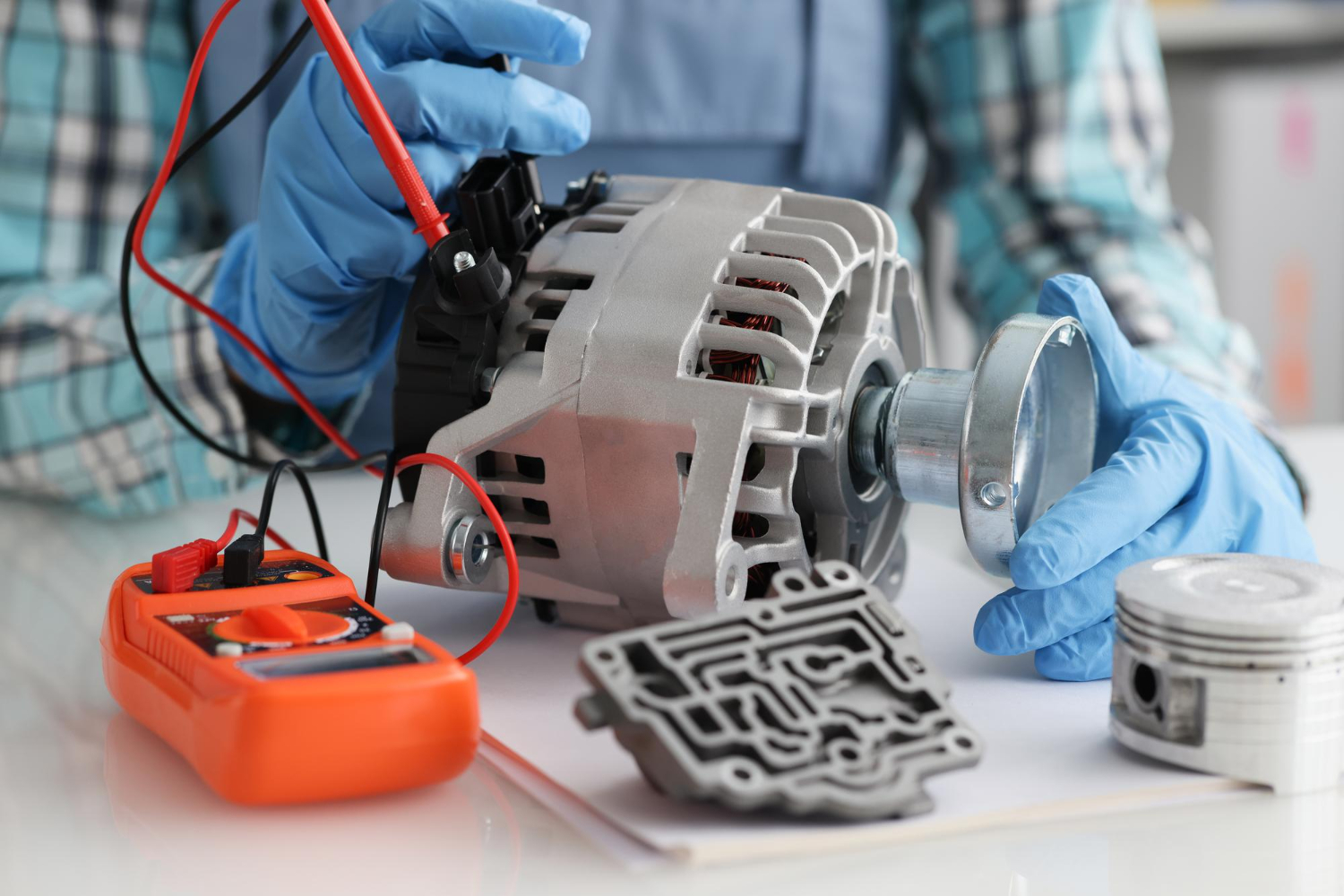
Servo motors sit at the center of modern production lines. When they fail without warning, everything around them stops. Output drops, scrap goes up, and maintenance teams scramble to find a spare or a field technician. For many plants, this happens at the worst possible time, like during peak orders or at the end of a quarter when schedules are already tight.
In this article, we will look at how advanced predictive maintenance turns servo motor repair from a last-minute emergency into a planned, data-driven process. We will walk through common failure modes, the diagnostics that reveal them early, and how to build a practical strategy that supports long-term reliability across motors, cranes, hoists, and motion control systems.
Turning Servo Motor Data Into Uptime and Revenue
When a critical servo motor fails without warning, the real cost is far more than the repair. Production stops, work-in-process sits on conveyors, and operators wait for maintenance to respond. In high-throughput plants, even short interruptions can:
- Delay customer shipments and overtime schedules
- Increase scrap and rework as lines restart out of spec
- Trigger emergency service premiums for field repairs
- Expose people and equipment to higher safety risk during rushed work
These risks often spike during seasonal peaks, when equipment is running harder, changeovers are tighter, and there is less slack in the schedule. A single failed servo at the wrong time can ripple through planning, inventory, and quality.
Advanced predictive maintenance shifts the focus from reacting to failed components toward continuous reliability optimization. Instead of relying on time-based tasks, or waiting for alarms to escalate, we use data, diagnostics, and drive analytics to see how each servo is actually behaving under load. This turns maintenance decisions into informed choices about risk, timing, and asset lifecycle.
At Zeller Technologies, we build this approach into a closed-loop reliability program. We combine field service, servo motor diagnostics, drive evaluation, and remanufacturing so that every inspection, repair, and upgrade feeds back into your long-term maintenance strategy.
Failure Modes That Undermine Servo Motor Reliability
Servo motors rarely fail all at once. Most problems grow slowly, starting as small changes in torque, speed, or temperature that are easy to miss during daily operation.
Common electrical failure modes include:
- Winding insulation degradation from heat, contamination, or moisture
- Partial discharge in high-voltage or high-frequency applications
- Demagnetization of permanent magnets from thermal or electrical stress
- Encoder signal noise that creates position drift or erratic motion
- Drive-related issues like harmonics or poor tuning that overstrain the motor
On the mechanical and thermal side, we often see:
- Bearing wear from high speed, side load, or lubrication issues
- Rotor imbalance or shaft misalignment from impacts or installation errors
- Brake drag that increases current draw and heat
- Inadequate cooling due to clogged air paths or dirty enclosures
Seasonal temperature and humidity swings can speed up these mechanisms, especially where servo motors run in hot, dusty, or washdown environments. Expansion, contraction, and moisture ingress put extra stress on insulation, seals, and connectors.
The early signs are usually subtle. Intermittent nuisance alarms, unexplained torque ripple, minor position errors, and rising motor current are frequent clues that something deeper is happening. Traditional time-based maintenance often misses these, because the motor may still meet basic production targets until the failure is close.
Advanced Diagnostics That See Failures Before They Happen
To spot these issues early, we rely on advanced diagnostic tools that look beyond simple pass/fail checks. High-resolution vibration analysis can detect bearing defects, imbalance, or mechanical looseness long before they are audible. Motor circuit evaluation helps see winding and rotor issues under different loading conditions.
Other common tests include:
- Insulation resistance and polarization index testing for insulation health
- Thermography to spot hot spots on motors, brakes, and cabling
- High-speed encoder feedback analysis for position and speed accuracy
- Drive parameter reviews to evaluate tuning, current limits, and faults
The real value comes from combining these tools with data pulled directly from the drive. Fault codes, current profiles, torque demand, position error, and temperature trends all tell part of the story. When we align that information with on-motor measurements, we get a clear picture of the servo’s actual condition and remaining risk.
Remote monitoring and secure data logging are especially useful in high-duty-cycle environments where stopping for inspections is hard. By trending data week-over-week and through seasonal changes, we can catch small shifts early, such as:
- Gradual increases in operating temperature
- Growing current imbalance between phases
- Slow drift in encoder counts or homing repeatability
- More frequent drive trips tied to specific load conditions
This trend view gives maintenance and operations leaders time to plan repairs or replacements instead of reacting to sudden breakdowns.
Building a Predictive Maintenance Strategy for Servo Motors
A strong predictive plan starts with a clear view of your servo assets. We work with teams to inventory motors and drives across production, handling, and crane or hoist systems, then rank them by:
- Impact on throughput and product quality
- History of failures, alarms, and rework
- Environmental stress like heat, dust, moisture, or vibration
- Exposure during seasonal production peaks
From there, we define a tiered monitoring program. Some high-risk servos benefit from online monitoring and continuous data collection. Others can be checked on a scheduled basis with offline tests during planned stops.
A typical structure may include:
- Continuous tracking of key drive parameters for critical axes
- Quarterly or semiannual offline tests for medium-priority assets
- Annual baseline checks for lower-impact servos or spares
Decision thresholds are then set for when to repair, rewind, remanufacture, or replace. These thresholds tie directly into plant systems such as CMMS, spares planning, and shutdown scheduling. When data crosses a defined limit, the system triggers a work order and a clear plan instead of an urgent scramble.
From Bench Repair to Full Servo System Modernization
Not every servo motor needs full remanufacturing. Sometimes a basic repair such as bearings, seals, cleaning, and encoder realignment is enough to return performance to acceptable levels. In other cases, a deeper remanufacturing process is the better choice to extend life and reliability.
Remanufacturing often includes:
- Rewinding and re-insulating stator windings
- Encoder replacement or upgrade
- Mechanical re-machining of critical fits and surfaces
- Factory-level testing for torque, speed, and feedback accuracy
Over time, many plants also find that legacy servo systems no longer match production needs. Modernization can raise performance and improve reliability without a full line redesign. Opportunities include:
- Upgrading older motors and drives to newer designs
- Improving feedback devices for tighter motion control
- Aligning servo upgrades with crane, hoist, and control system improvements
This integrated view matters. When servo motor repair, crane and hoist service, and motion control upgrades are treated as one roadmap instead of separate projects, plants gain better uptime, simpler maintenance, and clearer planning.
Turning Predictive Insights Into Long-Term Reliability Gains
Predictive diagnostics only create value when they are linked to disciplined decisions. When maintenance teams use test results, drive data, and defined rules together, servo motor repair stops being a reactive cost and becomes a lever for throughput, quality, and safety.
A practical path forward often starts with a focused pilot:
- Baseline testing of the most critical servo assets
- Defining key condition indicators tied to alarms and work orders
- Proving the approach through one or two lines before expanding plant-wide
By closing the loop between diagnostics, field service, and remanufacturing, plants can steadily raise servo system reliability and reduce surprise failures. At Zeller Technologies, we align these elements into a structured reliability strategy so that each repair, test, and upgrade moves you closer to stable, predictable production.
Get Started With Your Project Today
If your equipment is down or showing early signs of failure, we can help you get back to full performance quickly. Our servo motor repair specialists diagnose issues accurately and restore critical components to keep your operation running. At Zeller Technologies, we stand behind our work with thorough testing and clear communication at every step. Ready to discuss your needs or schedule a repair evaluation? Just contact us and we will respond promptly.