
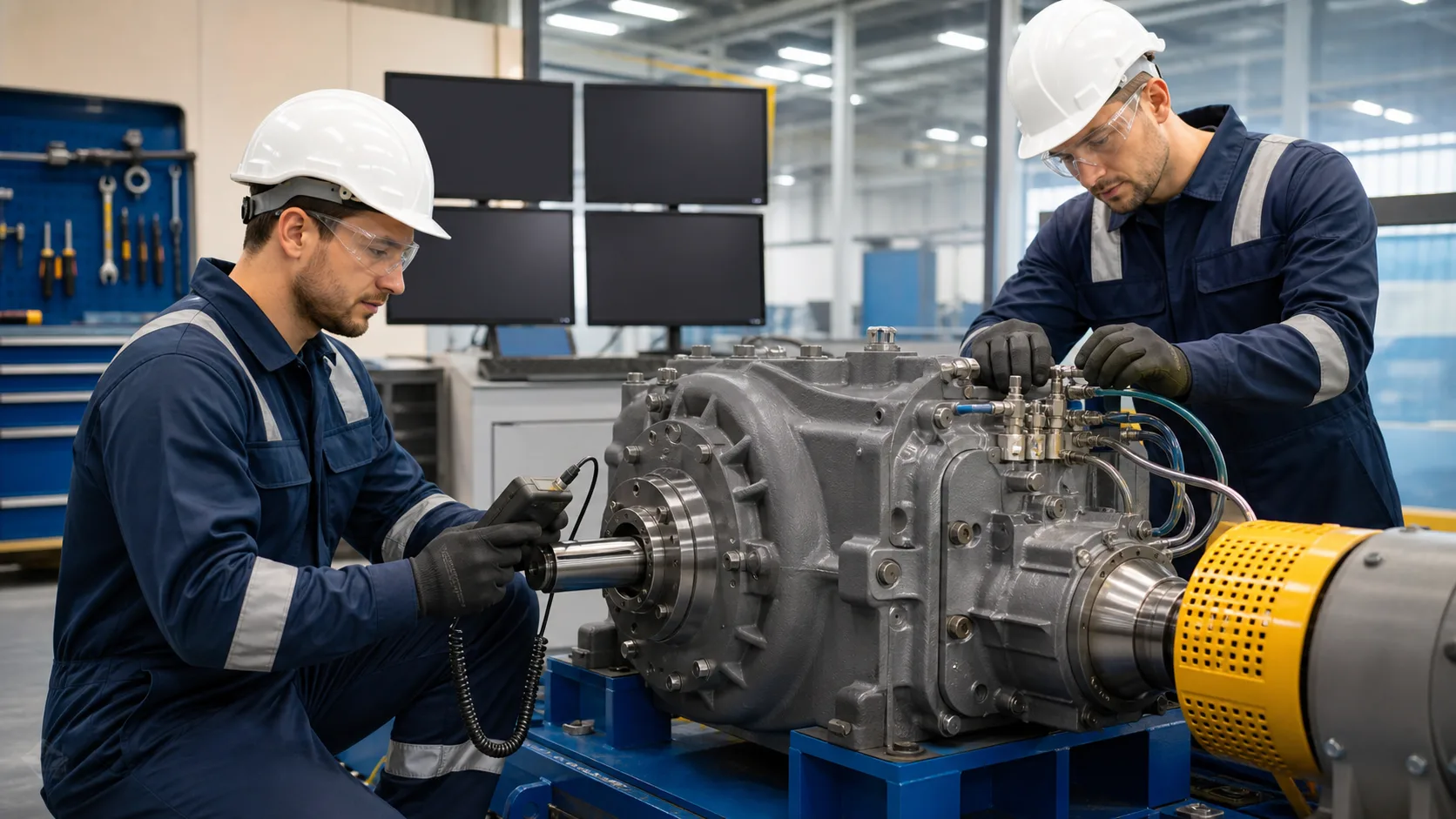
Protecting Production After Gearbox Repair
Bringing a failed gearbox back to life is an important win, but it is only the starting line. The real test comes when that repaired unit goes back into service and has to carry full production loads again. How you commission, break in, and monitor the gearbox will decide if it runs cleanly or fails early.
For heavy industrial plants, the risk is especially high when demand climbs and the weather starts to turn colder. A single unexpected gearbox failure can throw off production plans, force emergency maintenance, and strain customer commitments. With disciplined post-repair practices, you can turn a repaired gearbox into a stable and predictable asset instead of a constant worry.
At Zeller Technologies, we see the same pattern again and again. Plants that treat commissioning and condition monitoring as an insurance policy enjoy more uptime and fewer surprises. Plants that rush back to full load after industrial gearbox repair often pay for it later.
Verifying Repair Quality Before Startup
Before anyone hits start, the gearbox needs a thorough verification. This is where you confirm that what was promised in the repair is actually present in the unit on your floor.
Key pre-start checks include:
- Compare the repair report to the equipment nameplate and OEM documentation
- Confirm bearing replacements, gear sets, and seals match the agreed scope
- Check backlash, bearing clearances, and shaft fits against specifications
- Inspect gear tooth contact patterns with marking compound if possible
Mechanical installation needs the same level of care. A well-repaired gearbox that is installed poorly will still fail early. Maintenance teams should confirm:
- Mounting surfaces are clean, flat, and free of burrs or shims that do not belong
- Hold-down bolts are torqued in the correct pattern to the correct values
- Coupling or belt alignment with the driven machine is within tolerance
- Lubricant type, viscosity, and fill level match OEM or engineering guidance
- Breathers are installed and open, and seals are not damaged during rigging
For gearmotors or units with brakes and controls, electrical checks are just as important. That includes insulation resistance tests, winding checks, and verification of all terminations.
Before you apply a production load, run static and no-load checks:
- Rotate the shaft by hand to confirm smooth motion and correct direction
- Listen for rubbing, scraping, or uneven stiffness
- Perform a no-load run while trending noise, vibration, and temperature
- Verify the control logic, permissives, and basic sequencing
If anything seems off at this stage, stop and resolve it. Problems that appear at no load rarely improve once you introduce torque.
Commissioning Under Real Operating Conditions
Once basic checks are complete, it is time to see how the gearbox behaves under real work. Instead of jumping to full production, use a structured ramp-up.
A practical load ramp strategy can look like this:
- Start at roughly 25 percent load for a defined period while logging data
- Move to 50 percent and repeat the checks
- Increase to 75 percent, watching for sudden changes in vibration or temperature
- Reach 100 percent only after previous steps are stable
At each step, operators and maintenance should review:
- Vibration levels at bearings and housings, especially at gear mesh frequencies
- Temperature rise on the housing, bearings, and lubricant versus ambient air
- Motor amperage draw and torque readings where available
- Any change in audible gear mesh noise, knocks, or rattles
Operating parameters also need to be validated. Confirm that the lubricant reaches a stable operating temperature without running too hot or too cold. Check that protective devices such as overloads, torque limiters, temperature switches, and vibration alarms are working and set correctly.
Controls and system integration are often overlooked after industrial gearbox repair. Every gearbox is part of a larger system. We recommend verifying:
- PLC logic and interlocks with hoists, conveyors, and process controls
- Start-and-stop sequences that prevent sudden shock loads
- Emergency stop functions that remove power safely without trapping load
- Coordination with upstream and downstream equipment to avoid jams and impact loads
If your plant runs through seasonal temperature swings, pay attention to how the gearbox behaves as the ambient temperature changes. Cold starts can be especially hard on gear units if lubricant flow is not well managed.
Controlled Break-In to Extend Gearbox Life
Repaired or newly machined gear teeth need time to settle in. A controlled break-in helps the tooth flanks, bearing raceways, and seals develop stable contact surfaces. This reduces the risk of scuffing, micro pitting, and premature wear.
A practical break-in approach usually includes:
- Operating at reduced torque and speed for a set number of hours
- Avoiding frequent starts and stops that shock the gear train
- Gradually increasing to full duty cycles while trending temperatures and vibration
- Allowing the unit to cool between intervals during early hours if it runs warm
During break-in, watch for any sign that the gearbox is running hotter or noisier than expected. A slight increase in temperature can be normal, but rising trends or sudden spikes are not.
After the break-in period, plan a focused inspection:
- Take an oil sample and check for wear metals and contamination
- Pull a small amount of lubricant for visual inspection and look for metallic sheen
- Check accessible tooth contact surfaces for abnormal wear patterns
- Re-check fastener torque on mounting bolts and couplings
- Update your baseline vibration, temperature, and oil condition data
Those baselines become your reference point for all future condition checks.
Post-Repair Condition Monitoring for Maximum Uptime
The biggest gains come when a one-time industrial gearbox repair becomes part of a long-term reliability plan. Condition monitoring does not need to be complex to be effective, even in mid-sized plants across the central United States.
Core tools include:
- Vibration analysis to track bearing fault frequencies and gear mesh harmonics
- Infrared thermography to spot hot spots at bearings, seals, and couplings
- Oil analysis to trend wear metals, particle counts, and water ingress
Critical indicators to watch are:
- Changes at bearing defect frequencies that could show raceway or rolling element damage
- Rising sidebands around gear mesh that suggest misalignment or tooth wear
- Temperature rise compared to ambient, especially during cold weather starts
- Lubricant cleanliness, oxidation, and any sign of water or process fluid contamination
With a structured predictive maintenance program, teams can move away from simple time-based rebuild intervals. Maintenance is planned based on the actual health of the gearbox instead of guesswork, which reduces unplanned stoppages and protects production.
Partnering with Specialists to De-Risk Your Next Shutdown
The best time to control risk is before the next outage or emergency, not during it. We encourage plants to formalize a post-repair protocol for every major gearbox. That protocol should define:
- Standard commissioning and installation checklists
- Load ramp and break-in profiles by equipment class
- Minimum monitoring requirements and data collection intervals
- Clear roles for operations, maintenance, and reliability teams
When mechanical, electrical, and controls work are all involved, having a service partner that understands motors, hoists, industrial gearbox repair, controls, and predictive maintenance as one system can make a clear difference. That integrated view helps catch issues at the interfaces, where many problems begin.
At Zeller Technologies, we support heavy industrial operations across the central United States with repair, modernization, custom control solutions, and reliability-focused services. With disciplined commissioning, controlled break-in, and ongoing condition monitoring, your next repaired gearbox can become a steady, low-drama asset that supports your production targets season after season.
Protect Your Production With Expert Gearbox Repair
If you are seeing early warning signs of gearbox issues, now is the right time to act. At Zeller Technologies, we use advanced diagnostics to perform targeted industrial gearbox repair that keeps your equipment online longer. Our team will work with you to identify root causes, plan the repair around your schedule, and reduce the risk of costly unplanned downtime. To discuss your application and get a tailored recommendation, contact us today.