
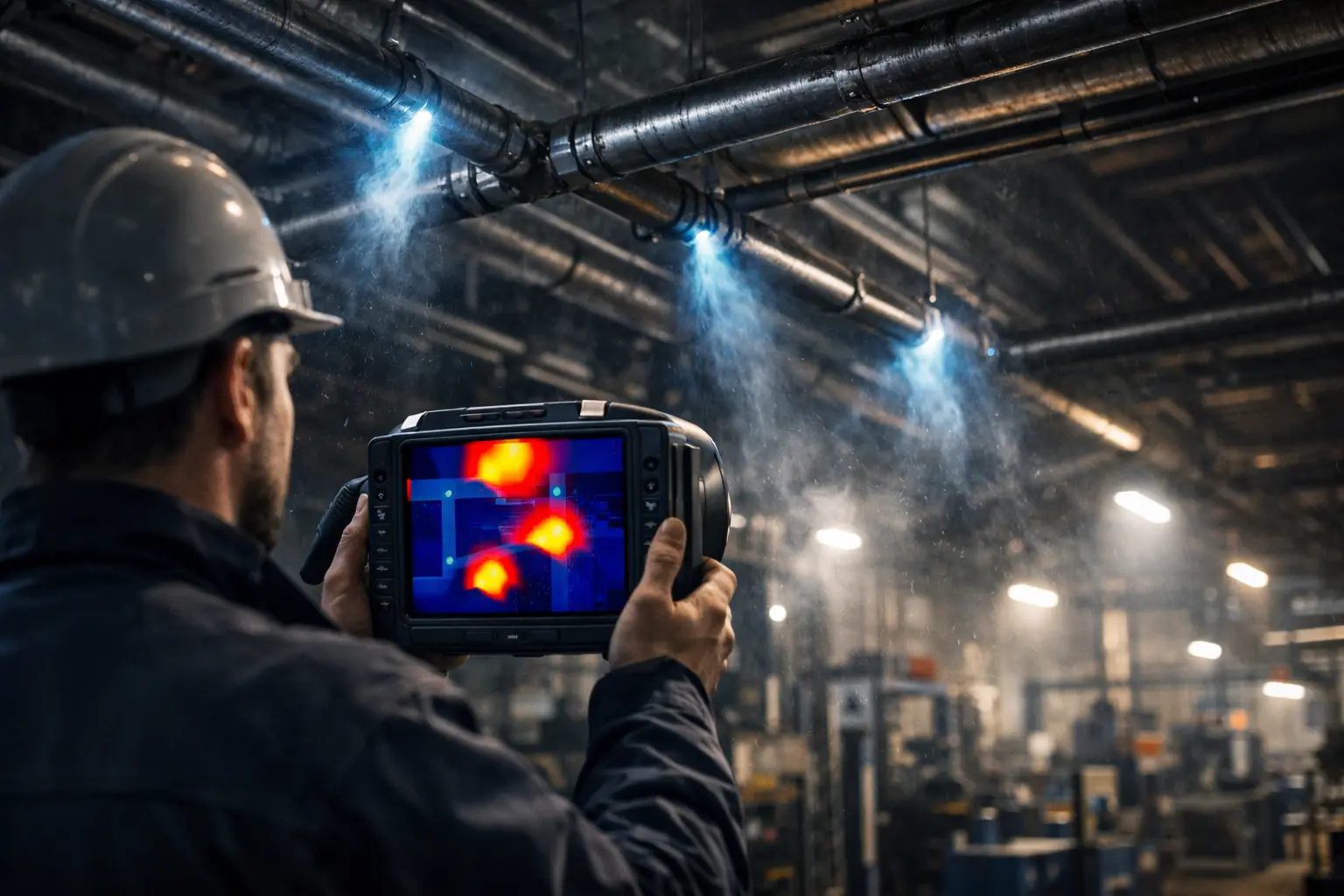
Ultrasonic Leak Detection for Compressed air
Compressed air and pressurized gas systems are essential in manufacturing, processing, packaging, and facility operations. They are also a common source of hidden waste. Small leaks can run for months, forcing compressors to work harder, driving up energy costs, and creating pressure instability that impacts production.
Ultrasonic leak detection is one of the most effective ways to find these leaks quickly, even in loud environments and hard-to-reach overhead piping. This guide covers what ultrasonic leak detection is, how it works, what to expect from an inspection, and how to choose the right approach and tools.
What is ultrasonic leak detection?
Ultrasonic leak detection is a method of locating leaks by listening for the high-frequency sound they produce. When pressurized air or gas escapes through a small opening, it creates turbulence. That turbulence generates ultrasonic energy that is typically above the range of human hearing.
Technicians use ultrasonic leak detection equipment to detect and pinpoint that sound. Modern systems can display the leak source visually, making it easier to confirm the exact location and document the finding for repair.
Why ultrasonic leak detection matters
Many facilities underestimate the impact of leaks because the symptoms feel normal:
• Compressors cycle more often than expected
• Pressure drops appear during peak demand
• Tools or equipment feel underpowered
• Energy bills stay high with no obvious cause
A single leak might not seem like a big deal. The problem is that leaks are often widespread and persistent. Over time, leaks increase compressor run time and energy consumption, and they can contribute to premature wear on equipment.
In some cases, facilities consider adding compressor capacity to maintain pressure when the better solution is to find and repair leaks already present in the system.
Where leaks hide most often
Leaks are commonly found in places that are easy to miss during routine rounds:
• Overhead airlines and headers
• Drops to workstations and machines
• Quick connects, couplers, regulators, and FRLs
• Hoses and fittings near repetitive motion points
• Valves, manifolds, and pneumatic actuators
• Equipment with vibration, heat, or frequent changeovers

These areas are also often located in high-noise production zones where leaks cannot be reliably heard.
The difference between traditional ultrasonic tools and acoustic imaging
Basic ultrasonic tools can detect ultrasonic sound and guide a technician to a general area. That approach works, but it can be slower and more dependent on the operator, especially at distance or when multiple potential leak sources are close together.
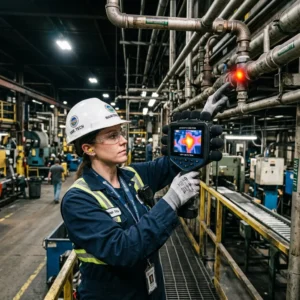
An Acoustic Imaging Camera Inspection adds a major advantage. It helps technicians see the sound source, not just hear it. This makes it easier to:
• Narrow down the exact leak point
• Confirm the source quickly in noisy areas
• Capture image evidence for maintenance teams
• Build consistent documentation for reporting and follow-up
Many programs also include software that estimates leak size, air loss, and approximate annual cost impact to support prioritization and ROI.
What happens during an ultrasonic leak detection inspection?
A typical inspection follows a structured process:
1. Survey and scan key areas like overhead runs, drops, and high-use zones.
2. Pinpoint the leak by narrowing the sound source to the exact location.
3. Document the finding with photo evidence when using acoustic imaging.
4. Estimate impact using reporting software, often including air loss and annual cost.
5. Provide recommendations so repairs can be completed efficiently.
6. Summarize results with total potential savings if identified leaks are repaired.
A major advantage is convenience. The work is often performed while production is running, with no shutdown required.
What you should expect in the report
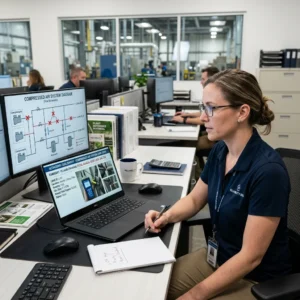
A strong ultrasonic leak detection report is designed to be used by maintenance and reliability teams right away. It typically includes:
• Leak location and description
• Photo documentation for identification
• Leak severity ranking or prioritization
• Estimated air loss for each leak
• Approximate annual cost impact per leak
• Total potential savings summary if repairs are completed
• Repair recommendations and next steps
This approach turns leak detection into a practical action plan, not just a list of observations.
How to choose ultrasonic leak detection equipment
If you are evaluating ultrasonic leak detection equipment, focus on what will matter in real plant conditions:
• Accuracy and speed: How quickly can the operator pinpoint the exact source?
• Performance in noise: Can it isolate leaks in loud production areas?
• Distance capability: Can it scan overhead runs and hard-to-reach locations effectively?
• Documentation: Can it capture images and export clear findings for repair teams?
• Reporting: Does it support impact estimates like air loss and cost per year?
• Ease of use: Is it comfortable for long inspection days?
• Repeatability: Can you run it as part of a recurring program and compare results over time?
An Acoustic Imaging Camera Inspection is often the best fit when you want fast location, visual confirmation, and strong documentation.
Beyond air: ultrasonic for electrical issues
Some ultrasonic systems can also support screening for early-stage electrical issues such as partial discharge and low-current arcing in switchgear and high-voltage systems. These problems can start small due to poor conduction or insulation deterioration and can grow into serious failures if not addressed.
When detected early, corrective action can help reduce risk of equipment damage, electrical shutdowns, and unplanned downtime.
How often should ultrasonic leak detection be performed?
It depends on how critical compressed air is to production and how dynamic the facility is. Many plants benefit from:
• Baseline survey: Establish a starting point for leak count and impact.
• Follow-up validation: Confirm repairs and document improvement.
• Recurring inspections: Quarterly, semi-annual, or annual surveys depending on leak recurrence and operational needs.
Facilities with frequent changeovers, high vibration, and heavy pneumatic use often see leaks return over time. Recurring programs help keep waste controlled.
FAQs about ultrasonic leak detection
1) How does ultrasonic leak detection work?
Ultrasonic leak detection works by sensing high-frequency sound created when pressurized air or gas escapes through an opening. The detector helps the technician locate the strongest ultrasonic signal, which typically corresponds to the leak source.
2) How is ultrasonic used in leak detection?
Ultrasonic is used by scanning suspected areas with ultrasonic leak detection equipment, then narrowing down the signal until the exact leak point is identified. With acoustic imaging, the technician can visually confirm the location and capture documentation for repair.
3) Why ultrasonic gas leak detection?
Ultrasonic gas leak detection is valuable because it can detect leaks that are difficult to see and hard to hear, especially in noisy environments. It is also effective for finding small leaks that still create significant long-term cost and risk.
4) What types of leaks can ultrasonic leak detection find?
Ultrasonic leak detection commonly finds compressed air and pressurized gas leaks at fittings, couplers, hoses, valves, regulators, and overhead piping drops. Many systems can also support screening for partial discharge and low-current arcing in electrical equipment.
5) What are the biggest benefits of an Acoustic Imaging Camera Inspection?
An Acoustic Imaging Camera Inspection helps pinpoint the exact leak location faster, confirms the source visually, and captures photo evidence for the report. It also supports better prioritization when paired with software that estimates air loss and annual cost impact.
Next steps
If your facility relies on compressed air, ultrasonic leak detection is one of the fastest ways to reduce waste, stabilize pressure, and support smarter maintenance planning. The key is pairing accurate detection with clear documentation and reporting that helps your team prioritize repairs and track results.