
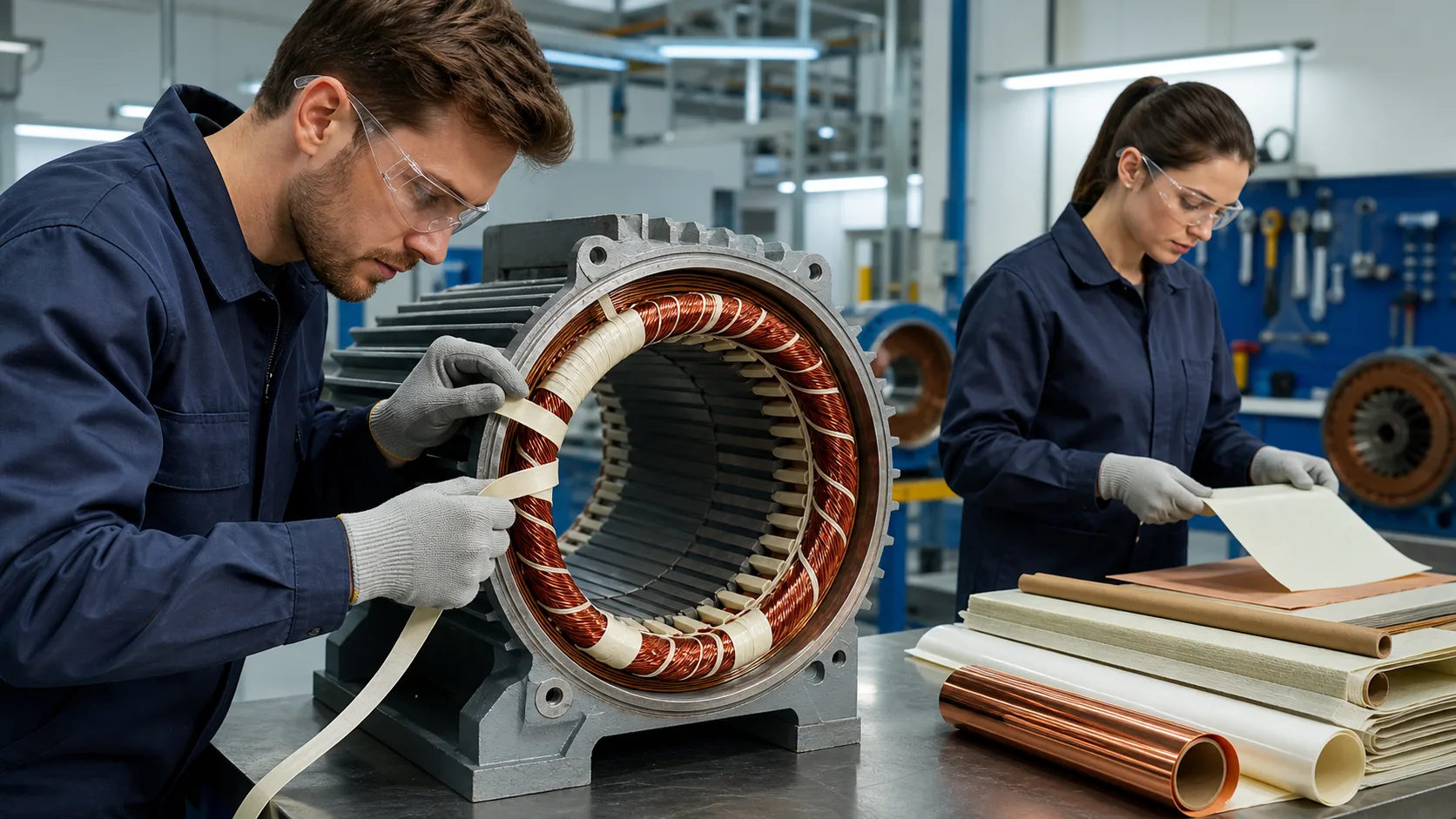
Understanding Insulation Systems in Industrial Motor Rewinding
Motor reliability depends on far more than the copper conductors inside the stator. The insulation system surrounding those conductors helps protect the motor from heat, voltage stress, moisture, vibration, and contaminants that can lead to winding failure. When insulation weakens, a motor may run hotter, operate less efficiently, or fail without much warning.
As winter production demands approach, we recommend reviewing the condition of motors that carry heavy loads or support critical processes. Seasonal temperature changes, reduced maintenance windows, and higher operating demands can expose insulation weaknesses that were previously manageable.
Insulation Systems Govern Motor Life and Performance
An industrial motor insulation system is the complete set of materials that electrically separates magnet wire, coils, phases, slots, and windings from the motor frame. It is not one part. It is a coordinated system designed to keep electrical current where it belongs while handling the motor’s normal mechanical and thermal demands.
A typical system may include:
- Magnet wire enamel around each conductor
- Slot liners and phase barriers that separate coils and slots
- Wedges, sleeving, lacing, and tapes that secure winding components
- Impregnation resin or varnish that supports and seals the finished winding
Each material has a job. Slot insulation helps prevent contact between the winding and the steel core. Phase insulation separates winding groups. Lacing and wedges help coils remain secure when the motor starts, stops, and vibrates. Resin helps bind the winding together and can limit movement, moisture exposure, and contamination.
During motor rewinding services, we evaluate the full insulation system rather than focusing only on visibly damaged conductors. A new coil installed with degraded slot insulation, incompatible tape, or an unsuitable resin system can still have weak dielectric performance. The materials must work together under the motor’s actual operating conditions.
Thermal Class Selection Must Match Operating Conditions
Insulation thermal classes, including Class B, Class F, and Class H, describe the temperature capability of an insulation system. A higher thermal class can provide greater temperature tolerance, but it does not correct the cause of overheating. If ventilation is poor, loading is excessive, or the motor experiences repeated starts, even a higher-rated system can face shortened service life.
We look at the complete operating picture before specifying insulation materials. That includes ambient temperature, winding temperature rise, hot spots, altitude, ventilation, load profile, duty cycle, and starting frequency. A motor that runs steadily in a clean indoor space faces different conditions than one exposed to moisture, dust, temperature swings, or frequent cycling.
Variable frequency drives can add another layer of insulation stress. High switching frequencies, voltage spikes, and reflected wave effects may place added strain on turn-to-turn insulation. In some applications, drive-related conditions can also contribute to bearing-current concerns. The rewind approach should account for the power source and control method, not only the motor nameplate.
Rewinding Quality Depends on Materials and Process Control
A dependable rewind begins before the failed winding is removed. We document the original winding data, including coil geometry, conductor size, turn count, connection configuration, and insulation requirements. That record helps preserve the electrical and mechanical characteristics needed for the motor to perform as intended after repair.
Material compatibility matters throughout the process. Magnet wire, insulation papers, tapes, wedges, sleeving, and resin systems should be selected as a coordinated group. Substituting one component without considering the others can affect thermal performance, dielectric strength, coil support, or fit within the stator slots.
Process control also protects the finished winding from preventable weaknesses. A quality rewind requires attention to:
- Controlled coil installation and correct slot fill
- Secure lacing and wedge placement to limit coil movement
- Proper resin impregnation and curing procedures
- Inspection of clearances and mechanical fit before reassembly
Testing confirms whether the insulation system is ready to return to service. Insulation resistance and polarization index testing can reveal signs of moisture, contamination, or broad insulation degradation before and after repair. These tests provide useful condition information, especially when compared with prior maintenance records.
Additional testing may include winding resistance measurements, phase balance verification, surge comparison testing, and hipot testing when appropriate. Surge testing can help identify turn-to-turn weaknesses, while resistance and phase checks can reveal connection or winding concerns. We document applicable test results so your maintenance and reliability teams have information for repair records, failure reviews, and future predictive maintenance planning.
Build a Winter Motor Reliability Plan
Before winter demand peaks, we recommend prioritizing motors that support cranes and hoists, drive critical process equipment, operate in severe environments, or show unfavorable temperature, vibration, or electrical test trends. These assets can create a larger production risk when maintenance windows become limited and operating demands increase.
Insulation selection should reflect the motor’s environment and duty requirements, not a one-size-fits-all repair plan. Reviewing insulation condition, winding design, drive application, and test history before a failure gives you a clearer basis for repair planning. When uptime is at risk, proper assessment and well-controlled motor rewinding services can help reduce uncertainty and support more reliable operation through changing seasonal conditions.
Strengthen Your Motor Maintenance Strategy
Zeller Technologies helps industrial teams evaluate repair needs with attention to winding integrity, operating conditions, and long-term reliability. Learn how our motor rewinding services can support informed maintenance decisions and consistent motor performance. For guidance on an upcoming repair or assessment, contact us to discuss your application with our team.