
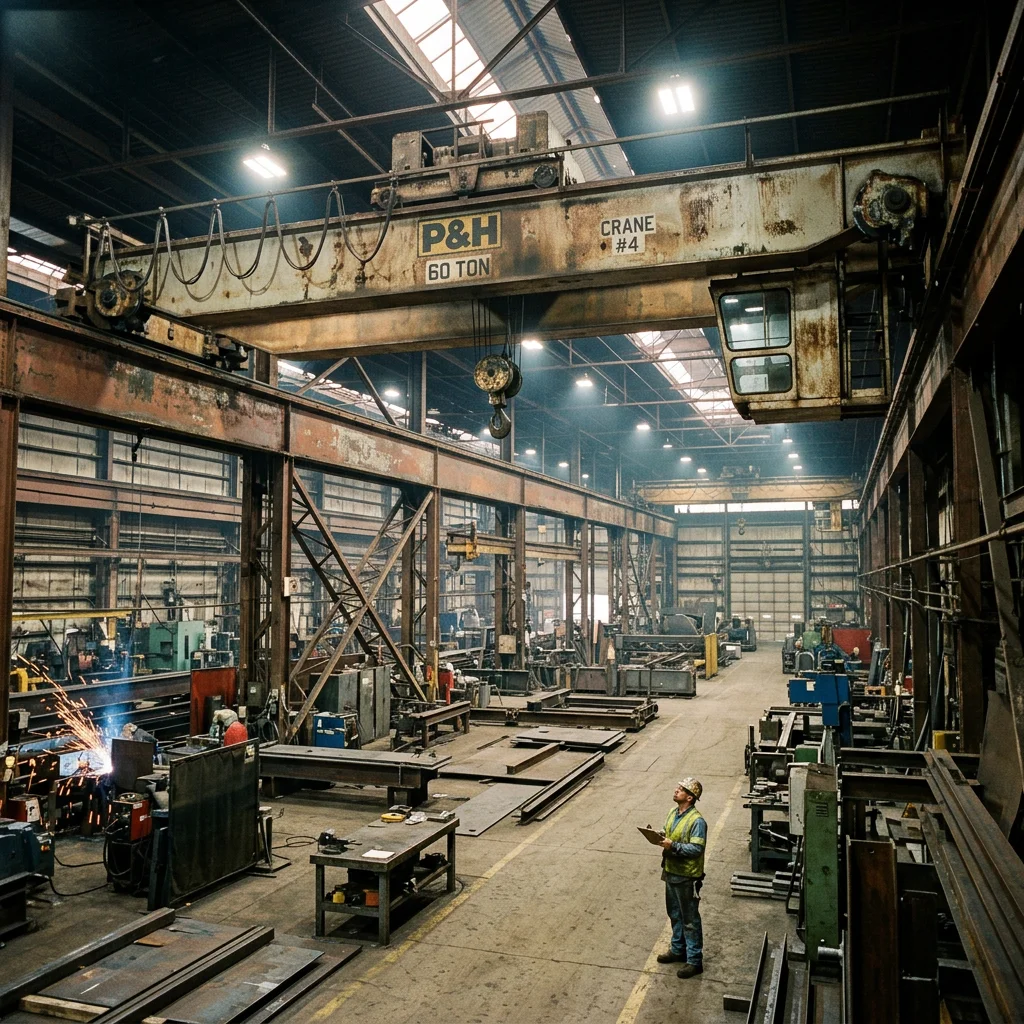
In many St. Louis, MO industrial operations, metals, manufacturing, distribution,and fabrication, the overhead bridge crane is the spine of material movement. But when it begins to lag, vibrate, overheat, or trigger nuisance faults, every department feels the strain: production slows, maintenance costs rise, and safety margins shrink.
This article is built for plant managers, reliability engineers, EHS leaders, and procurement teams who need clarity on when an aging crane system has crossed the threshold from “functional with maintenance” to “strategic upgrade required.” The goal is to help you avoid costly downtime while keeping your facility compliant, efficient, and safe.
Addressing Downtime and Compliance Risks in Legacy Crane Systems
St. Louis operations typically run cranes ranging from Class C (moderate service) to Class D/E (heavy/industrial cycling). Many were installed 20 to 40 years ago and now face:
- Higher throughput demands
- Stricter OSHA/ASME standards
- Wear on structural members and hoist drives
- Obsolete controls or spare parts shortages
Most important business outcome:
A targeted crane upgrade can cut monthly downtime by 8 to 12 hours and eliminate persistent compliance issues, especially when modernizing drives, controls, and lifting components.
Problems & Signals Users Actually See
1. Frequent Hoist Overheating or Unexpected Stops
- Root Causes: Aged motors, overloaded cycles, failing brakes, or outdated contactor controls.
- Immediate Triage: Check duty class alignment and monitor hoist temperature after each cycle.
2. Increasing Wheel Wear or Rail Misalignment
- Root Causes: Structural distortion, end truck wear, or building settlement are common in older St. Louis industrial sites.
- Triage: Perform a quick span and squareness check; log wheel wear rate over 2–4 weeks.
3. Excessive Load Sway or Jerky Movements
- Root Causes: Outdated controls lacking VFD; degraded mechanical components.
- Triage: Slow manual jog cycles and compare acceleration curves.
4. Nuisance Faults from Obsolete Controls
- Root Causes: Legacy controls with no replacement parts.
- Triage: Document fault codes and identify whether the PLC or relay ladder is nearing the end of life.
5. Chronic Inspection Findings
- Root Causes: OSHA non compliant guards, wiring issues, missing signage, and worn hooks/latches.
- Triage: Escalate recurring notes to reliability leadership these often indicate upgrade timing.
Problems & Signals Users Actually See
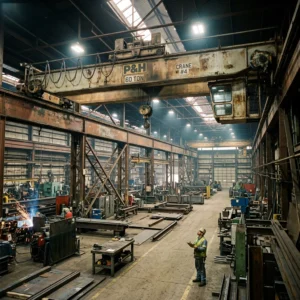
1. Frequent Hoist Overheating or Unexpected Stops
- Root Causes: Aged motors, overloaded cycles, failing brakes, or outdated contactor controls.
- Immediate Triage: Check duty class alignment and monitor hoist temperature after each cycle.
2. Increasing Wheel Wear or Rail Misalignment
- Root Causes: Structural distortion, end truck wear, or building settlement are common in older St. Louis industrial sites.
- Triage: Perform a quick span and squareness check; log wheel wear rate over 2 to 4 weeks.
3. Excessive Load Sway or Jerky Movements
- Root Causes: Outdated controls lacking VFD; degraded mechanical components.
- Triage: Slow manual jog cycles and compare acceleration curves.
4. Nuisance Faults from Obsolete Controls
- Root Causes: Legacy controls with no replacement parts.
- Triage: Document fault codes and identify whether the PLC or relay ladder is nearing end of life.
5. Chronic Inspection Findings
- Root Causes: OSHA non compliant guards, wiring issues, missing signage, worn hooks/latches.
- Triage: Escalate recurring notes to reliability leadership these often indicate upgrade timing.
Compliance Requirements That Affect Every Overhead Crane Upgrade
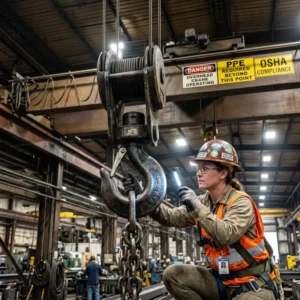 Even though the title doesn’t explicitly include standards, overhead crane upgrades inherently intersect with compliance. Only standards directly relevant to the scenarios implied by the keywords are included.
Key Requirements
- OSHA 1910.179: Requires functional safety devices, proper wiring, load tests, and regular inspections.
- ASME B30.2: Defines operational safety and design requirements for top running bridge cranes.
- NFPA 70B: Influences electrical maintenance protocols for upgraded drives and panels.
Consequence of Non Compliance:
Repeat OSHA findings can lead to fines and forced shutdowns, especially if near miss incidents occur involving suspended loads.
Key Performance Indicators That Signal It’s Time to Upgrade Your Crane
- If your crane shows >10% slowdown on lift cycles, then consider a hoist upgrade.
- If runway alignment exceeds 1/8″ variance, then inspect end trucks immediately.
- If OSHA findings repeat twice, then budget for modernization.
- If parts are unavailable or obsolete, then retrofit or replacement is more cost effective.
- If downtime exceeds 6 hours/month, then evaluate VFD/control upgrades.
Frequently Asked Questions (FAQS)
1. What are the top signs an overhead bridge crane needs upgrading?
Common indicators include slowed hoist speeds, excessive load sway, increasing wheel wear, and electrical components that overheat under normal duty cycles. These symptoms typically point to aging motors, worn mechanical assemblies, or outdated controls that can no longer keep pace with production requirements. When these issues recur even after repairs, it’s a strong sign that your crane is approaching end of life performance and should be evaluated for a structured upgrade.
2. How long do overhead bridge cranes last in St. Louis facilities?
Most overhead bridge cranes operate reliably for 20 to 30 years, but industrial duty cranes in metals, fabrication, or high throughput distribution environments often experience accelerated wear. Environmental conditions such as temperature swings, humidity, and airborne particulates common in St. Louis manufacturing can shorten component life. Regular inspections and timely retrofits can significantly extend the lifespan, but once structural fatigue or obsolescence sets in, modernization becomes the most practical path.
3. Is it better to repair or retrofit an older crane?
Repairs work well when the issue is isolated, such as a brake, wheel, or gearbox component that has failed due to normal wear. However, when recurring electrical or mechanical faults stem from outdated controls or worn out core assemblies, retrofitting is typically far more cost effective and reduces downtime dramatically. A retrofit also introduces modern safety features and energy efficient drives, giving the crane an additional 10 to 15 years of productive life.
4. What is the cost range for a crane controls upgrade?
Most VFD and PLC based control retrofits fall between $25,000 and $70,000, depending on the crane’s tonnage, travel length, and complexity of the existing system. Costs increase when custom engineering, advanced safety interlocks, or integration with plant automation is required. Although the upfront expense may seem significant, many facilities recoup the investment in 12 to 24 months due to reduced maintenance, fewer nuisance faults, and smoother production flow.
5. How do I stay compliant with OSHA 1910.179 during upgrades?
Facilities must maintain accurate inspection records, ensure all modifications meet ASME B30.2 performance requirements, and complete a full rated load test after any major upgrade. OSHA requires that all electrical work follow proper guarding, labeling, and operational safety protocols, an area where outdated cranes fall short. Partnering with a qualified crane service provider helps ensure documentation, testing, and commissioning are aligned with regulatory expectations.
Schedule Your St. Louis Crane Inspection Today
When your St. Louis crane begins to exhibit the signs outlined here, a strategic upgrade can dramatically improve uptime and safety. Schedule a crane or hoist inspection with Zeller Technologies to understand your best modernization path.