
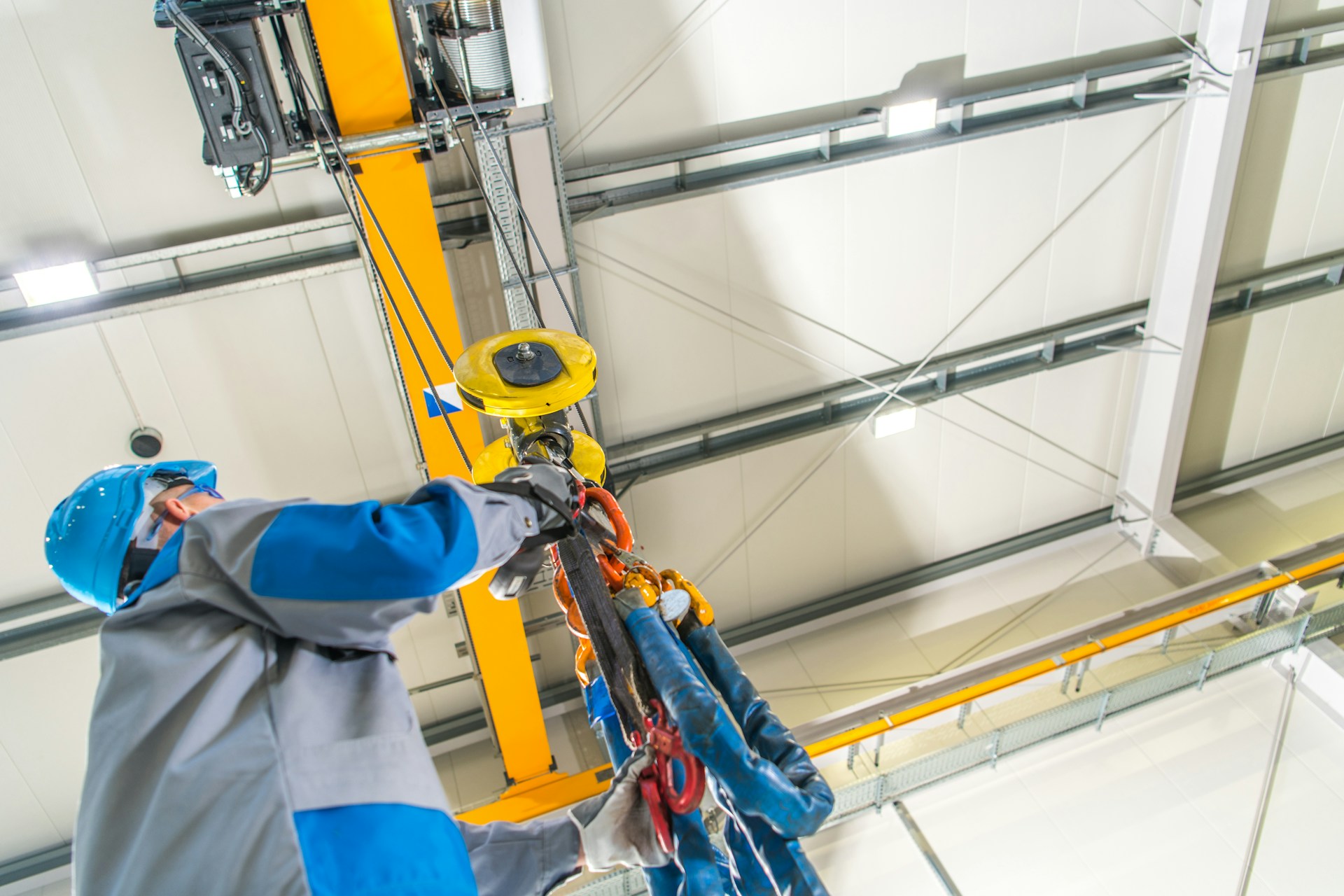
Protecting Uptime with Strategic Bridge Crane Maintenance
Bridge crane maintenance is often treated as a necessary expense that gets attention only when something fails. For asset-intensive operations, that view is expensive. Maintenance is a strategic lever that directly affects throughput, safety performance, and the return on every dollar invested in lifting equipment. When cranes are reliable, production flows, schedules hold, and teams spend less time firefighting and more time improving.
At Zeller Technologies, we work with manufacturers, metals producers, utilities, logistics providers, and material handling operations across the central United States. In these facilities, a single overhead crane is often the heartbeat of a line or an entire bay. When it stops, everything around it slows or stops as well. A proactive bridge crane maintenance strategy, backed by experienced service and modern reliability tools, protects uptime, extends asset life, and supports long-term capital planning instead of reacting to the latest emergency.
Unplanned crane downtime does more than pause a lift. It ripples through production schedules, order fulfillment, and even safety statistics. Operators are forced into workarounds, secondary equipment is pushed harder than it was designed to run, and supervisors juggle priorities to keep commitments. Viewing maintenance as a strategic investment reframes the discussion: we are not only fixing equipment, we are protecting flow, margin, and people.
Understanding the True Cost of Bridge Crane Downtime
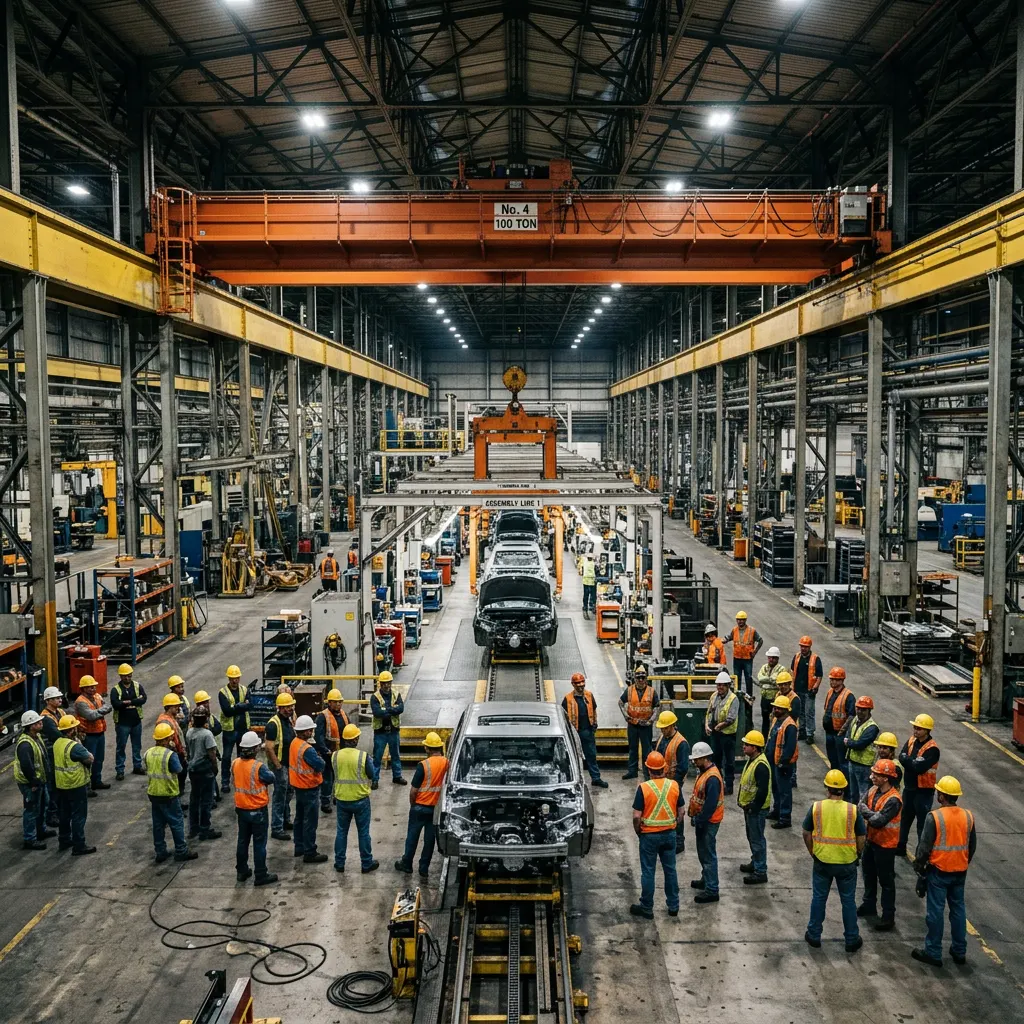
The visible costs of downtime are only part of the story. When a bridge crane fails unexpectedly, the direct expenses start piling up quickly:
-
- Lost production hours while lines wait for the crane to move material
- Overtime labor to recover schedule once the crane returns to service
- Expedited shipping to meet delivery promises that are now at risk
- Scrap and rework from rushed restarts or improvised material handling
- Emergency repair premiums when service must happen immediately
Those numbers are usually easy to quantify, and they rarely look good. The less obvious costs can be even more damaging over time. Unreliable cranes create:
-
- Schedule instability that disrupts planning and capacity commitments
- Missed or reshuffled delivery dates that strain customer relationships
- Bottlenecks when material cannot move to or from critical process steps
- Extra WIP inventory as teams try to buffer against unpredictable outages
When maintenance is reactive, failures arrive on their own timetable, not the plant’s. A data-driven maintenance plan turns that around. By tracking condition, duty cycles, and failure patterns, we can convert many surprises into scheduled interventions. That lets production planning align crane outages with:
-
- Planned line shutdowns or changeovers
- Low demand periods or off-shifts
- Other maintenance activities that require the same access or lockouts
This coordination does not eliminate all failures, but it sharply reduces the chaos and cost that come with unplanned breakdowns.
Maintenance as Risk Mitigation and Safety Assurance
Bridge cranes move heavy loads above people, equipment, and critical infrastructure. When maintenance is deferred, the risk profile changes. Worn components and misadjusted systems make events more likely, such as:
-
- Dropped loads from compromised hooks, wire rope, or braking issues
- Structural damage from misaligned wheels, cracked welds, or fatigue
- Runaway trolleys or hoists due to control faults or braking failures
- Uncontrolled motions that surprise operators and nearby personnel
Systematic maintenance is one of the strongest controls an organization has against these events. Regular inspections, functional checks, and timely component replacements catch conditions before they escalate into incidents.
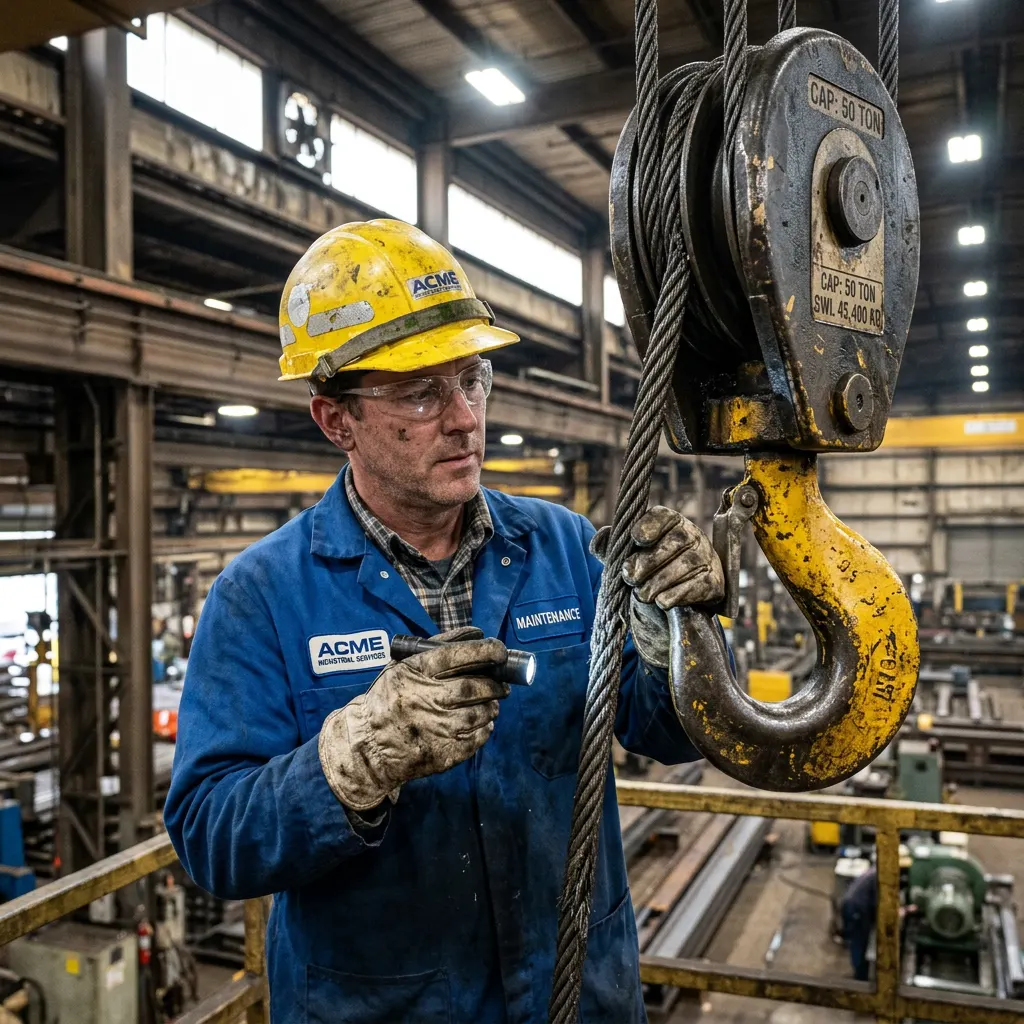
Compliance is another key dimension. Facilities operate under requirements from OSHA and relevant standards from groups such as CMAA and ANSI, along with OEM recommendations. Having thorough inspection and maintenance records helps show that:
-
- Cranes are inspected at appropriate intervals
- Deficiencies are corrected in a timely manner
- Repairs are done according to accepted technical practices
Those records matter if there is an audit, an insurance review, or an incident investigation. From a corporate risk perspective, well-maintained cranes support:
-
- Lower exposure to liability claims and legal challenges
- Fewer recordable safety incidents tied to material handling
- Stronger safety culture, since operators see that equipment is taken seriously
Reliable cranes are not just an operations topic; they are a core part of an organization’s risk management strategy.
Extending Asset Life Through Expert Crane Services
Bridge cranes represent a significant capital investment. The way we maintain them often determines whether they serve reliably for decades or require early replacement. Effective maintenance is not limited to greasing a few fittings. It requires a structured approach to inspection, adjustment, and replacement across the entire system.
Key maintenance activities that support long asset life include:
-
- Detailed inspections of wire rope, hooks, sheaves, and drums
- Lubrication and alignment checks on trolleys and bridge wheels
- Brake inspections and adjustments for hoist, trolley, and bridge motions
- Bearing condition checks and replacements before failure
- Periodic review and testing of control systems and limit switches
Bridge cranes rely heavily on electric motors, gearboxes, and industrial controls. Issues in these components do not stay isolated. A motor with electrical problems can overload a gearbox, and a misaligned drivetrain can accelerate wear on wheels and rails. By combining crane and hoist services with focused electric motor and gearbox expertise, we can:
-
- Keep motions smooth and repeatable across all axes
- Reduce vibration and mechanical shock that shorten component life
- Prevent small control problems from leading to major mechanical failures
At Zeller Technologies in the St. Louis region, we see a wide range of duty cycles, loads, and environmental conditions across the central United States. Heavy steel service, foundries, power generation, and high-throughput warehouses each stress cranes in different ways. An experienced regional specialist understands those differences and can align maintenance with real-world operating conditions, not just generic checklists.
Elevating Performance with Modernization and Predictive Insights
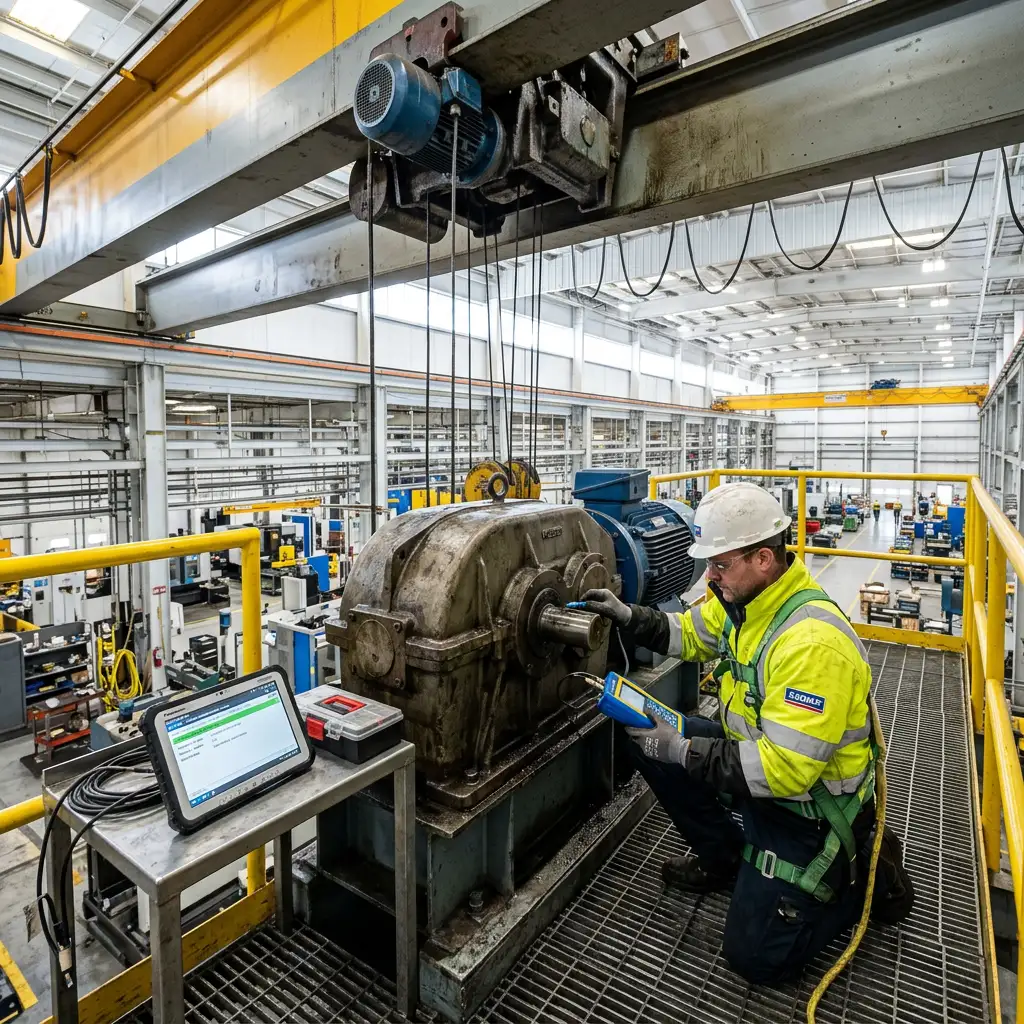
Many facilities assume that improving crane performance requires full replacement. In reality, targeted modernization often delivers significant gains at a fraction of replacement cost. Upgrades to drives, controls, and safety devices can improve:
-
- Positioning accuracy for precise placement and reduced cycle times
- Load control, including smoother acceleration and deceleration
- Energy efficiency through modern drive technology and better control logic
- Operator ergonomics, with clearer interfaces and improved feedback
These improvements not only make production more efficient, they also support safety by giving operators more control and better situational awareness.
Maintenance strategy is also evolving beyond calendars and checklists. Predictive maintenance and condition monitoring bring data into decisions about when and how to intervene. By monitoring motors, gearboxes, bearings, and controls, we can identify patterns like:
-
- Rising vibration on a hoist gearbox before catastrophic failure
- Temperature trends in motors that indicate insulation or overload issues
- Intermittent control faults that point to emerging component problems
With this insight, maintenance and operations teams can agree on planned repair windows that prevent extended outages. Integrating bridge crane maintenance into broader plant reliability programs helps drive continuous improvement in OEE, asset reliability, and lifecycle cost. Cranes stop being isolated assets and become part of a coordinated reliability strategy across the facility.
Building a Proactive Crane Strategy with Zeller Technologies
Transitioning from reactive to planned maintenance does not need to be overwhelming. It starts with getting a clear picture of your current crane fleet and risks. Practical first steps include:
-
- Conducting baseline condition assessments of each bridge crane
- Ranking cranes based on criticality, duty cycle, and consequence of failure
- Optimizing inspection and maintenance intervals around actual service conditions
- Standardizing documentation so inspection findings and repairs are traceable
From there, plants can layer in modernization plans, spare parts strategies, and predictive tools that match their operational goals and budget.
Zeller Technologies brings together crane and hoist services, electric motor and gearbox capabilities, industrial controls experience, and predictive maintenance solutions into a unified reliability approach. That combination helps facilities move from isolated repairs toward a cohesive strategy for their lifting assets. By aligning bridge crane maintenance with production, safety, and capital objectives, decision-makers can treat maintenance not as an unavoidable expense, but as a long-term strategic investment in the stability and performance of their operations.
Keep Your Bridge Cranes Safe, Reliable, and Production-Ready
If you are ready to reduce unplanned downtime and extend the life of your lifting equipment, our expert bridge crane maintenance services can help. At Zeller Technologies, we inspect, service, and modernize your systems so they operate safely and consistently in demanding environments. Connect with our team to discuss your specific equipment and schedule a maintenance plan that fits your operation, or contact us to get started today.