
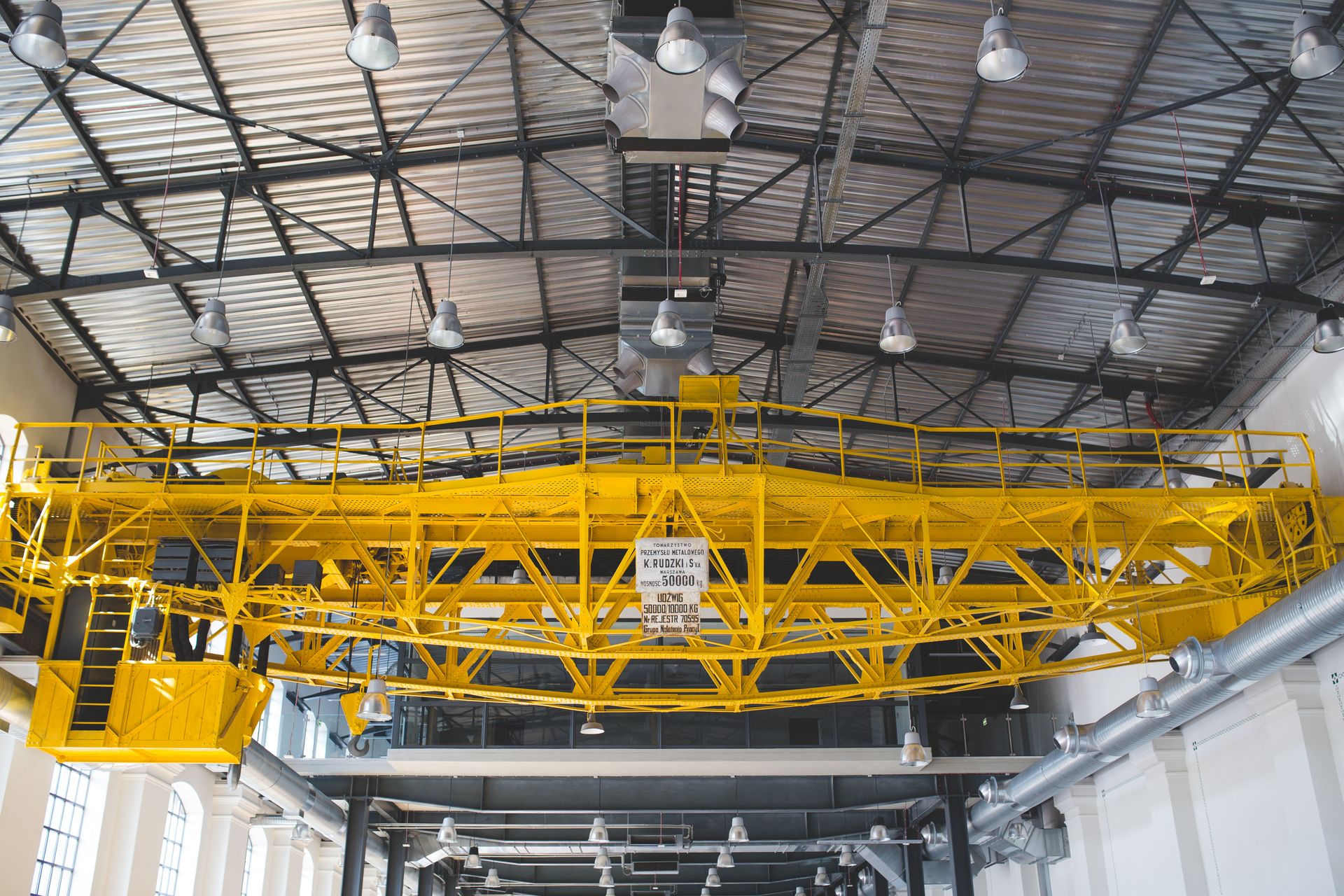
Why Bridge Crane Predictive Maintenance Must Be Proactive
Bridge crane maintenance is not just a checklist task; it is a direct lever on uptime, safety, and cost control. When a critical crane goes down, production stalls, people are exposed to risk, and maintenance teams are forced into rushed decisions. Those effects are magnified as plants prepare for peak-production periods, when every hour of output matters.
Traditional calendar-based and reactive bridge crane maintenance leaves too much to chance. You may be inspecting on schedule, yet still get hit with unexpected failures, overtime repairs, and repeat issues on the same assets. When maintenance is driven mainly by breakdowns and due dates, you lose the opportunity to plan work on your terms.
At Zeller Technologies, we see better results when plants integrate three elements into one predictive roadmap: a clear asset criticality model, a thoughtful sensor and data strategy, and disciplined KPI tracking. When these pieces work together, maintenance leaders can move from chasing failures to intentionally managing crane reliability.
Defining Asset Criticality Across Your Crane Fleet
A predictive program starts with knowing which cranes matter most to safety and production. Asset criticality is the lens that keeps you from treating every bridge crane the same, even though their impact on the business is very different.
A practical criticality framework looks at questions such as:
- What happens to throughput if this crane fails?
- Could a failure lead to a dropped load or personnel exposure?
- Does this crane handle product that is hard to rework or scrap?
- Are there regulatory or customer requirements tied to this crane?
- How expensive and time-consuming is repair or replacement?
From there, you can segment your cranes into logical tiers. For example, main production cranes in bottleneck areas sit in the top tier, with tighter inspection intervals, higher data coverage, and faster escalation paths. Auxiliary or maintenance cranes may sit in lower tiers, with simpler inspection routines and fewer sensors, as long as risk is clearly understood.
We regularly help plants align these tiers with real-world conditions by drawing on:
- Detailed visual and functional inspections of cranes and hoists
- Modernization assessments that compare current condition with OEM design limits
- Duty cycle and application review, not just nameplate ratings
- Historical failure modes that show where issues actually occur
Age, environment, and history all influence criticality. A heavily loaded, older main process crane in a hot, dusty bay deserves far more predictive attention than a light-duty maintenance crane in ideal conditions.
Building a Sensor and Data Strategy for Bridge Cranes
Once critical assets are identified, the next step is deciding what to measure and how to capture it in a reliable way. The goal is not to cover everything at once, but to design a sensor and data strategy that can scale as your program grows.
For bridge crane maintenance, common sensing technologies include:
- Vibration and temperature sensing on motors, gearboxes, and wheel bearings
- Load and strain sensing on hoists and bridge structures
- Brake condition indicators, such as stroke or wear monitoring
- Encoder feedback for hoist and travel motion accuracy
- Condition monitoring for control panels, drives, and power feeds
On the data side, you need an architecture that fits your plant reality. Some sites favor on-premises storage for operational technology, while others are ready for secure cloud-based platforms. In both cases, consistent questions apply: How will devices connect in high-noise industrial areas? How will data flow into CMMS or ERP systems, and how will cybersecurity policies be maintained?
Zeller Technologies often recommends phased deployments, beginning with the highest criticality cranes and the clearest failure risks. We pay close attention to interoperability with existing controls, variable frequency drives, and safety circuits. This helps plants add intelligence without disrupting established control strategies or compliance requirements.
Turning Condition Data Into Maintenance Workflows
Collecting data is not the hard part anymore. The real value comes when condition data turns into clear, repeatable maintenance actions that planners and technicians trust.
A strong predictive workflow translates raw data into:
- Alarm thresholds tied to acceptable operating windows
- Automatic work order triggers in your maintenance system
- Recurring tasks such as inspections, lubrication, or torque checks
- Clear instructions on what to inspect and what to document
We also recommend combining multiple inputs into a single view of asset health. For each crane or hoist, that might include sensor trends, inspection findings, and operator observations. When these are scored or ranked in a consistent way, planners can compare cranes across the fleet and focus their limited resources on the assets that truly need attention.
Because Zeller Technologies provides repair, modernization, and 24/7 emergency services across the central United States, we see recurring failure signatures on bridge cranes. This field insight allows us to help plants define standard response plans for scenarios such as:
- Abnormal vibration patterns in hoist gearboxes
- Repeated overload trips or unusual load distribution
- Irregular travel motion that points to runway or wheel issues
- Brake-related anomalies that could affect stopping distance
Aligning service playbooks with predictive insights lets maintenance teams act quickly and consistently instead of treating every alert as a one-off event.
KPIs That Prove Predictive Maintenance Is Working
Without clear KPIs, predictive maintenance can turn into a technology experiment instead of a reliability program. Bridge crane KPIs should tie directly to maintenance performance, safety, and compliance.
Core reliability and maintenance KPIs often include:
- Mean time between failures (MTBF) for key cranes and hoists
- Mean time to repair (MTTR) for critical failures
- Planned versus unplanned maintenance ratio
- Schedule compliance for inspections and preventive tasks
- Maintenance cost per operating hour, by crane tier
Safety and compliance metrics are just as important. For cranes, it is helpful to track:
- Near-miss events linked to lifting operations
- OSHA-related findings tied to cranes and hoists
- Dropped-load incidents or load handling deviations
- Emergency stop events and their root causes
- Inspection nonconformities before and after predictive measures
We encourage plants to establish realistic baselines, then set quarterly targets that align with upcoming production peaks. As Zeller Technologies performs inspections, repairs, and modernization work, that service history becomes a rich source of data to refine KPI dashboards and trend reports.
Roadmap Execution From Pilot Crane to Plant-Wide Program
The most successful bridge crane predictive programs start small, learn fast, and then scale. A focused pilot project on a single critical crane or crane bay lets you prove value and refine your approach before wider rollout.
A typical roadmap includes:
- Selecting a crane that is both high impact and representative of wider fleet issues
- Defining clear objectives, such as reducing unplanned downtime or improving inspection compliance
- Choosing a minimal but meaningful sensor set to address known failure modes
- Establishing specific KPI targets and review intervals for the pilot
Governance and change management are just as important as technology. Maintenance, operations, safety, and engineering all need defined roles. Standard procedures should explain how to interpret alarms, when to pause production, how to escalate findings, and how to close out follow-up actions.
Over time, ongoing collaboration with Zeller Technologies helps plants adjust maintenance intervals, refine alarm limits, decide when modernization is justified, and plan replacements before failures occur. By treating bridge crane predictive maintenance as a structured, long-term program rather than a one-time project, manufacturers can align crane reliability with business objectives in a clear and repeatable way.
Protect Uptime With Proactive Bridge Crane Care
If you are ready to reduce unplanned downtime and keep your lifting equipment operating safely, our team can help you put a focused plan in place. Explore how our bridge crane maintenance solutions support reliable, long-term performance tailored to your facility. At Zeller Technologies, we work with you to identify issues early, optimize inspection schedules, and coordinate repairs around your production needs. Have a specific project or question in mind today? Contact us so we can discuss the best next steps for your operation.