
How Proactive Gearbox Repair Protects Critical Cranes
A crane gearbox failure in the middle of a busy shift does not just stop one line; it can freeze an entire facility. Production backs up, people stand waiting, and the safety risk around a suspended or mispositioned load grows by the second. For steel mills, automotive plants, and other heavy industries, the crane is often the heartbeat of the process, and the gearbox is at the center of that system.
Industrial gearbox repair, when planned and executed before failure, breaks this chain. Instead of running to failure and reacting under pressure, maintenance and reliability teams can treat gearbox health as a leading indicator of crane reliability. At Zeller Technologies, we work with plants across the central United States to connect repair, field service, and engineered upgrades into a single strategy that supports uptime, safety, and long-term crane performance.
The key idea is simple: healthy gearboxes keep cranes predictable. When gearbox repair follows a structured plan, it directly supports higher uptime, safer operation, and lower total cost of ownership over the life of the crane.
Why Crane Gearboxes Are a High-Risk Failure Point
Crane gearboxes live a hard life. They see frequent starts and stops, changing loads, and high shock when picks are not perfectly smooth. Ambient temperatures can be high, especially in mills or during warm seasons, and contaminants like dust, moisture, and corrosive vapors can work their way into housings and lubricants.
That operating environment creates several common failure modes, including:
- Gear tooth pitting and spalling from repeated surface stress
- Bearing fatigue from misalignment, overloading, or poor lubrication
- Lubricant breakdown that leads to metal-to-metal contact
- Shaft and housing distortion from sustained heat and load
- Seal wear that allows dirt and moisture into the gearbox
Once these issues start, they often accelerate quickly when cranes run heavily loaded for long hours. Heat builds, lubrication loses film strength, and minor surface damage can turn into chipped teeth or seized bearings.
The impact goes far beyond the gearbox itself. A failing gearbox can lead to:
- Dropped or suddenly shifted loads
- Skewing and racking of the bridge and runway
- Drive synchronization issues between multiple drives
- Additional stress on hoist motors, couplings, and brakes
There is also regulatory exposure: unsafe crane behavior linked to mechanical failure increases risk under OSHA and ASME requirements for safe crane operation and inspection. When a gearbox fails in a way that affects load control or travel behavior, it quickly becomes both a production and compliance problem.
Early Warning Signs That Demand Industrial Gearbox Repair
The good news is that gearboxes rarely fail without warning. The signals are there if teams know where to look and act on what they see.
From a measurable standpoint, reliability engineers should pay close attention to:
- Vibration signatures at gear mesh and bearing defect frequencies
- Rising gearbox surface temperatures or abnormal thermal patterns
- Lubricant particle counts, water content, and viscosity changes
- Increased current draw or torque demand on the drive motor
On the operating floor, crane operators and supervisors often notice symptoms first. Common signs include:
- New or louder gear whine, grinding, or knocking sounds
- Irregular travel or hoist motion, such as surging or hesitation
- Inconsistent acceleration or deceleration performance
- Repeated overload trips or unexpected stops during normal lifts
Structured inspections, regular oil sampling, and predictive maintenance tools make it possible to catch these issues early. When vibration analysis, thermal imaging, and motor testing are coordinated, they create a clear picture of gearbox health.
At Zeller Technologies, we link these condition monitoring results directly to industrial gearbox repair recommendations. That closed loop between early detection and corrective action helps maintenance teams move from reacting to failures to planning repair work on their own terms.
Engineering-Grade Repair Versus Patch Fixes
Not all gearbox work delivers the same result. Quick fixes or partial repairs may get a crane running again, but they often leave the root cause untouched and shorten the time to the next failure.
Common patch approaches include:
- Swapping a single bearing without evaluating shaft condition
- Topping off lubricant instead of correcting contamination or breakdown
- Ignoring gear tooth wear patterns that point to misalignment
- Resealing housings without checking for housing distortion
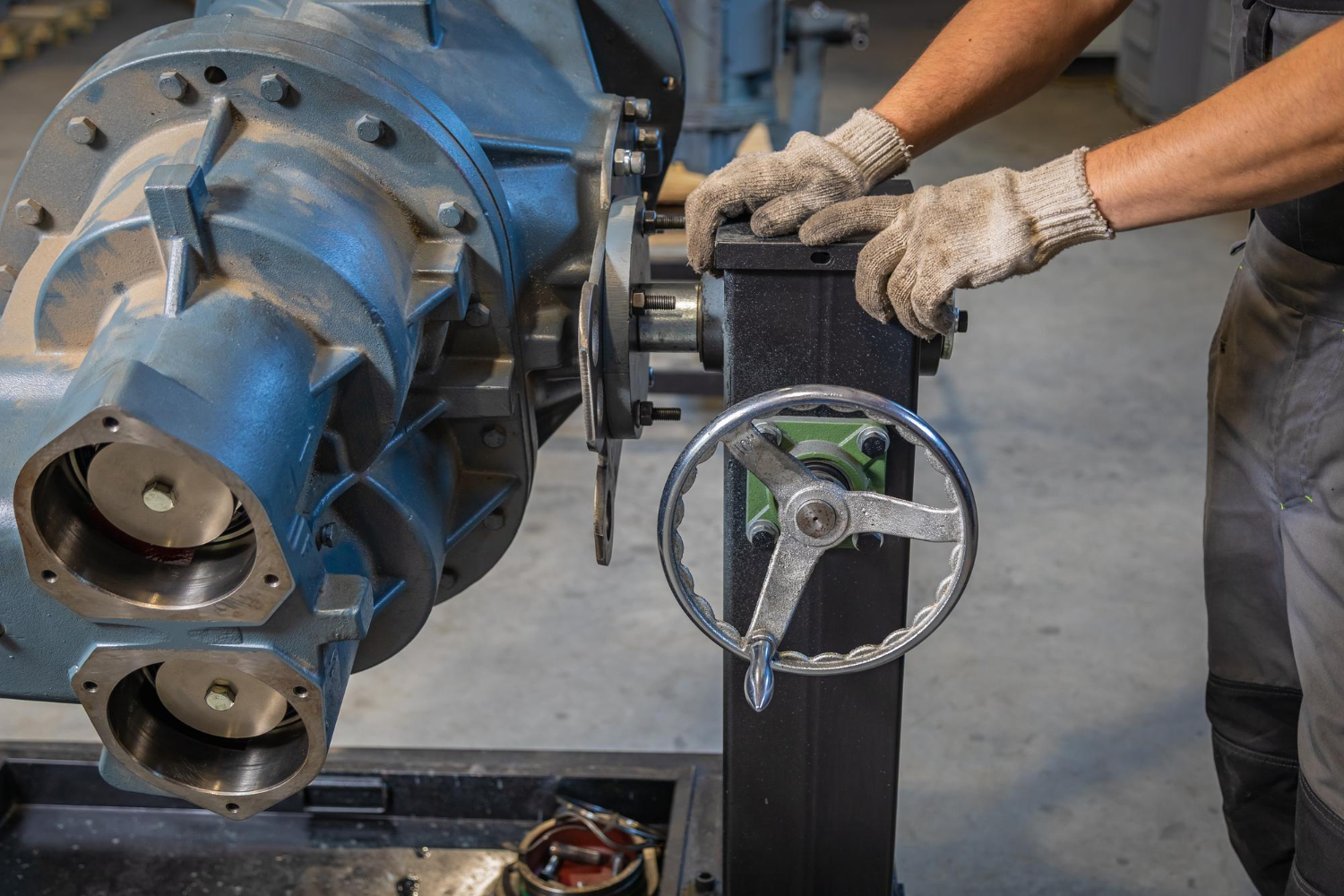
An engineering-grade industrial gearbox repair process takes a different path. At a high level, a disciplined workflow includes:
- Full teardown and cleaning of all components
- Root cause analysis of wear, fractures, or pattern changes
- Dimensional inspection of shafts, housings, and bores
- Detailed gear and shaft evaluation for cracks, pitting, and runout
- Correct bearing and seal selection based on actual duty and environment
- Alignment checks between gearbox, motor, and driven equipment
- Controlled reassembly with documented fits, clearances, and torque values
Repair time is also an opportunity to modernize older crane gearboxes. Upgrades might include improved materials, better seal technologies, optimized lubrication paths, or updated coupling designs that handle current duty cycles and ambient conditions more effectively.
With in-house machining, balancing, and testing capabilities, a repair partner can make sure the rebuilt gearbox works as part of a complete system. For Zeller Technologies, that means confirming that gearboxes interface properly with motors, hoists, and control systems so the crane returns to service with predictable and repeatable performance.
Integrating Gearbox Repair Into a Lifecycle Crane Strategy
Treating each gearbox failure as a one-off problem keeps plants in a cycle of emergency work. A more effective approach is to fold industrial gearbox repair into a full crane lifecycle strategy that also considers hoist and trolley drives, bridge and runway alignment, controls, and safety circuits.
Reliability engineers can use several tools to guide decisions:
- life-cycle cost analysis to compare repeated repairs to planned replacement
- Criticality ranking to identify which cranes carry the highest production or safety risk
- Spares strategies for gearboxes and major subassemblies on key cranes
Data from variable frequency drives, condition monitoring systems, and field inspections can be combined to decide when to repair a gearbox, when to upgrade, and when to plan for full replacement. The goal is to align major work with planned outages or seasonal shutdowns rather than during peak demand.
Zeller Technologies supports plants by coordinating gearbox and crane work with maintenance windows. Field evaluation, engineering insight, and turnkey execution help compress downtime and bring cranes back online in a controlled, reliable state instead of under emergency conditions.
Turning Gearbox Insights Into Actionable Reliability Gains
The next step for many plants is to look across their crane fleet and identify which gearboxes are closest to their mechanical, thermal, or duty-cycle limits. High-duty cranes that support melt shops, coil handling, stamping, or assembly flow are usually at the top of that list.
Practical actions for maintenance and reliability teams include:
- Establishing baseline vibration and oil analysis for critical crane gearboxes
- Reviewing recent crane incidents, near-misses, or recurring alarms for mechanical clues
- Flagging gearboxes with rising temperature or current trends for closer inspection
- Partnering with an industrial gearbox repair provider to create a prioritized repair and upgrade roadmap
By treating every gearbox inspection and failure report as data, plants can uncover patterns that point to deeper issues in motors, hoists, runway alignment, or controls. Zeller Technologies focuses on tying those insights together so that gearbox repair is not just a fix, but a step toward a more reliable and safer crane system across the entire facility.
Get Started With Your Project Today
When your operation is on the line, you need reliable experts who can diagnose issues quickly and keep your equipment running. Our team at Zeller Technologies specializes in precise industrial gearbox repair tailored to demanding applications. We work closely with you to understand your equipment, timelines, and performance requirements so we can recommend the right solution. If you are ready to discuss your project or schedule service, please contact us today.