
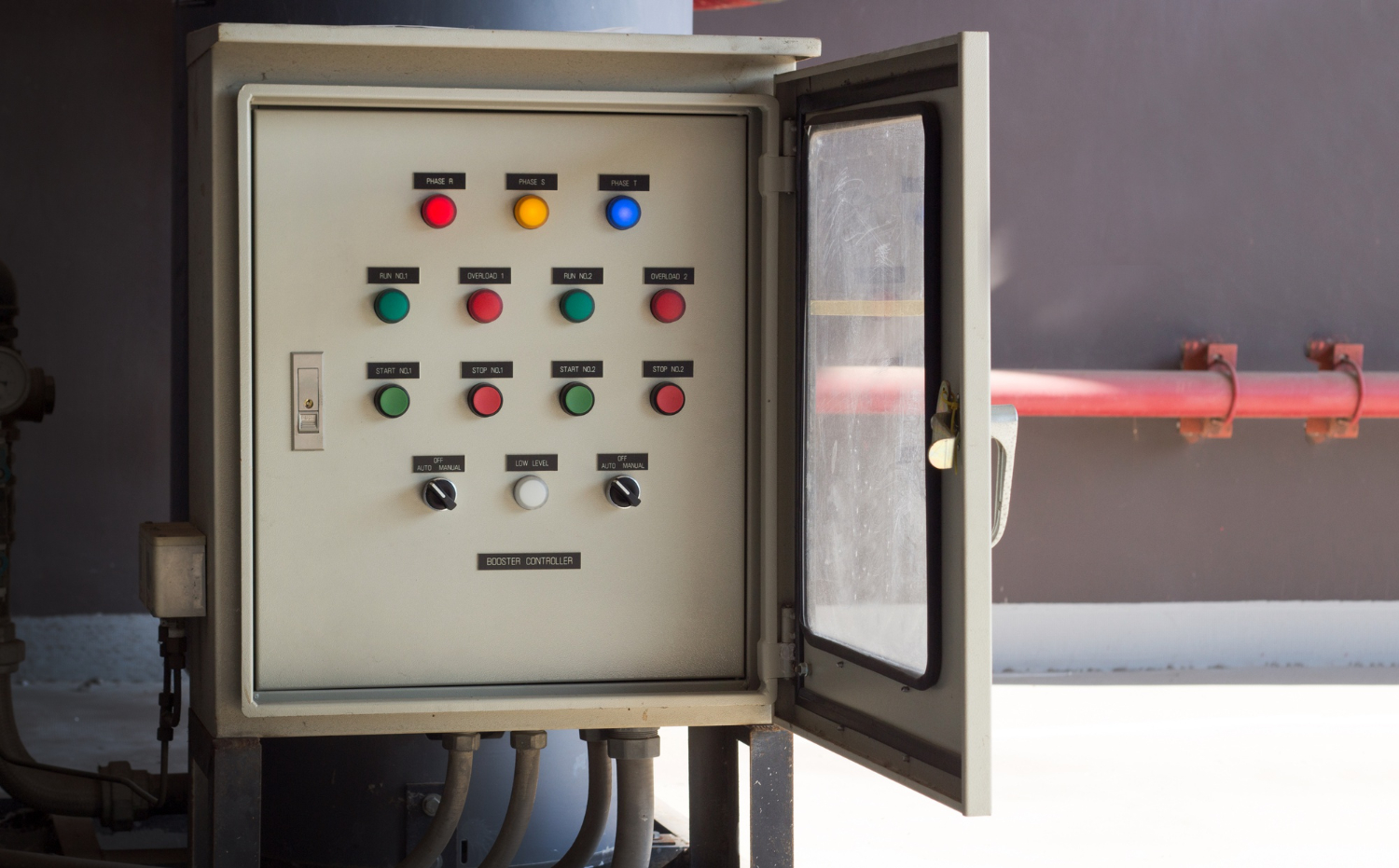
Rethinking Your UL 508A Panel Strategy Before Peak Season
Control panels rarely fail at a convenient time. For many plants, late spring and early summer mean production ramps, outage work, and capital projects all happening at once. When that season hits, the reliability, compliance, and availability of your UL 508A panels move from background detail to real business risk.
Many teams treat UL 508A as a simple checkbox: find a listed shop, send a spec, get a label. That approach worked when systems were simpler and panels were mostly basic motor starters and relays. Today, you are dealing with safety circuits, networked devices, PLCs, VFDs, integrated crane and hoist systems, and higher fault levels. Under those conditions, “any UL 508A panel shop” is not a strategy.
Our goal here is to help engineering, maintenance, and reliability leaders step back and question whether their current panel specifications still match how their plants really run. With a bit of structure, you can use your UL 508A panel standards to reduce risk, speed troubleshooting, and support long-term modernization plans instead of just checking a box.
Why UL 508A Compliance Is the Floor, Not the Ceiling
UL 508A sets the rules for how industrial control panels are built and labeled. It focuses on things like:
- Appropriate use of listed components
- Spacing and creepage distances
- Short-circuit current rating (SCCR) marking
- Wiring methods and overcurrent protection
That is all important, but it covers only the panel itself, not the performance of your overall system. UL 508A does not guarantee good application engineering, high uptime, or easy maintenance. A panel can be compliant and still be hard to troubleshoot, risky to modify, or poorly matched to your environment.
We regularly see misconceptions such as:
- Assuming any UL 508A label means optimal design and documentation
- Treating every panel the same, no matter the application
- Expecting future expansion to fit into a panel that was never designed for it
As plants add more automation, integrate cranes and hoists, or expand lines, the pressure from regulators, insurers, and corporate safety teams increases. Panels now need to align not only with UL 508A, but also with:
- NFPA 70 (National Electrical Code)
- NFPA 79 for industrial machines
- OSHA requirements for lockout/tagout and safe servicing
- Corporate or global engineering standards
You want a UL 508A panel shop that understands this broader picture and can design with these expectations in mind, not just apply a label.
Critical Questions to Ask Any UL 508A Panel Shop
If you are reviewing your specifications, the best place to start is with the questions you ask potential panel partners. A stronger prequalification process will protect you later, when schedule pressure is high.
On engineering depth and application expertise, ask:
- How do you handle complex motor control, such as multiple VFDs, common DC bus systems, or regenerative drives?
- What experience do you have with coordinated crane and hoist controls, including load limiting and travel limits?
- Who is responsible for SCCR calculations, fault studies, and coordination or selectivity? Is that person a controls engineer, or just following a template?
- How do you design and verify integrated safety circuits and safety-rated devices?
On documentation and lifecycle support, look for more than a panel layout and a simple schematic. Ask what “standard deliverables” mean to them. Strong panel packages usually include:
- As-built CAD drawings and panel layouts
- Detailed schematics and I/O lists
- Component bills of material with manufacturer part numbers
- Clear wire numbering and terminal schedules
- Revision history and change management notes
Also ask how they support panels years later. Can they pull up historical drawings quickly? Do they keep digital archives aligned with what is actually installed in your plant?
On testing, validation, and real-world conditions, push for details about:
- Factory acceptance testing (FAT) on every panel, not just large projects
- Power-up and I/O testing, including interlocks and safety circuits
- How they consider ambient temperature, dust, vibration, or corrosive environments
- How they confirm compatibility with your existing MCCs, feeders, and network architecture
If you work with overhead lifting equipment or large motors, it is particularly important that your panel shop understands real-world duty cycles and inrush current, not just nameplate data.
Aligning Panel Specifications with Reliability and Predictive Goals
If you want better uptime, your panel specification needs to speak the language of reliability, not just compliance.
Design for maintainability should never be an afterthought. When you update your specs, consider calling out:
- Standardized components across the plant where practical
- Clear wire labels and terminal markers that match the drawings
- Segregation of low-voltage control and high-voltage power wiring
- Logical grouping of drives, starters, PLCs, and I/O for easier troubleshooting
- Extra panel space and spare I/O to allow for future modifications
Those details may feel small during design, but during a summer peak with a line down, they can mean the difference between a twenty-minute fix and a multi-hour outage.
To support predictive maintenance and controls integration, plan for condition data at the panel level, especially for critical motors, cranes, and hoists. Your spec should address:
- Space and provisions for current sensors, temperature sensors, or vibration interfaces
- Access to power quality data for drives and large loads
- Network connectivity to plant historians, SCADA, and CMMS systems
- Clear labeling of any diagnostic ports or test points
Finally, align panel requirements with your seasonal and outage planning. If you know most major work occurs during specific shutdown windows, build into your panel spec:
- Expectations for commissioning support and on-site assistance
- Remote diagnostics capabilities where appropriate
- Rapid response procedures if there are issues at startup
This kind of planning is especially helpful in the central United States, where high summer heat can stress motors and power systems just as production ramps up.
Evaluating a UL 508A Panel Shop Beyond Price and Lead Time
Price and lead time are always important, but they are not the only way to judge a UL 508A panel shop. Before you award work, take a closer look at how each shop is positioned to support you over the life of the equipment.
First, review their OEM relationships and parts strategy. Ask questions like:
- Which OEMs do you commonly work with for drives, starters, PLCs, and safety relays?
- How do you address long lead components?
- What is your approach when a part becomes obsolete?
A shop with strong OEM ties can often respond more quickly when you need replacements or upgrades.
Second, consider service and modernization capabilities. A shop that can not only build panels, but also:
- Retrofit legacy controls on existing equipment
- Modernize crane and hoist control systems, not just the panel in isolation
- Integrate new panels into existing lines with minimal downtime
will bring more value during turnarounds and expansions.
Finally, examine their quality systems and feedback loop. Ask how they:
- Capture field failures or issues from startups
- Update standard designs based on what is learned
- Coordinate with your maintenance and engineering teams on lessons learned
A panel partner that listens to the plant floor and feeds that back into future builds will help you continuously improve.
Turning Specifications Into a Strategic Panel Partnership
When you step back, your UL 508A panel specifications are more than a technical document. They are a tool to align corporate safety policies, plant reliability goals, and your modernization roadmap into a single, repeatable standard.
A practical way to start is to run a cross-functional review before upcoming outages. Bring together engineering, maintenance, safety, reliability, and operations. Compare your current specs to what teams actually see at the panels during troubleshooting and startups. Close the gaps, simplify where possible, and make sure requirements are clear enough that any approved panel shop knows exactly what “good” looks like for your facilities.
At Zeller Technologies, we see this connection every day as we support industrial and manufacturing plants with motors, cranes and hoists, controls, and predictive maintenance across the central United States. By combining UL 508A panel design with field service, modernization, and 24/7 emergency support, we help plants move from one-off panel purchases to long-term control strategies that support safety, uptime, and growth.
Get Started With Your Project Today
Partner with Zeller Technologies to design and build control panels that are safe, compliant, and tailored to your application. Explore how our UL 508A panel shop capabilities can streamline your next project and support your production goals. If you are ready to discuss requirements or need help defining your specifications, contact us so we can help you move from concept to installation with confidence.