
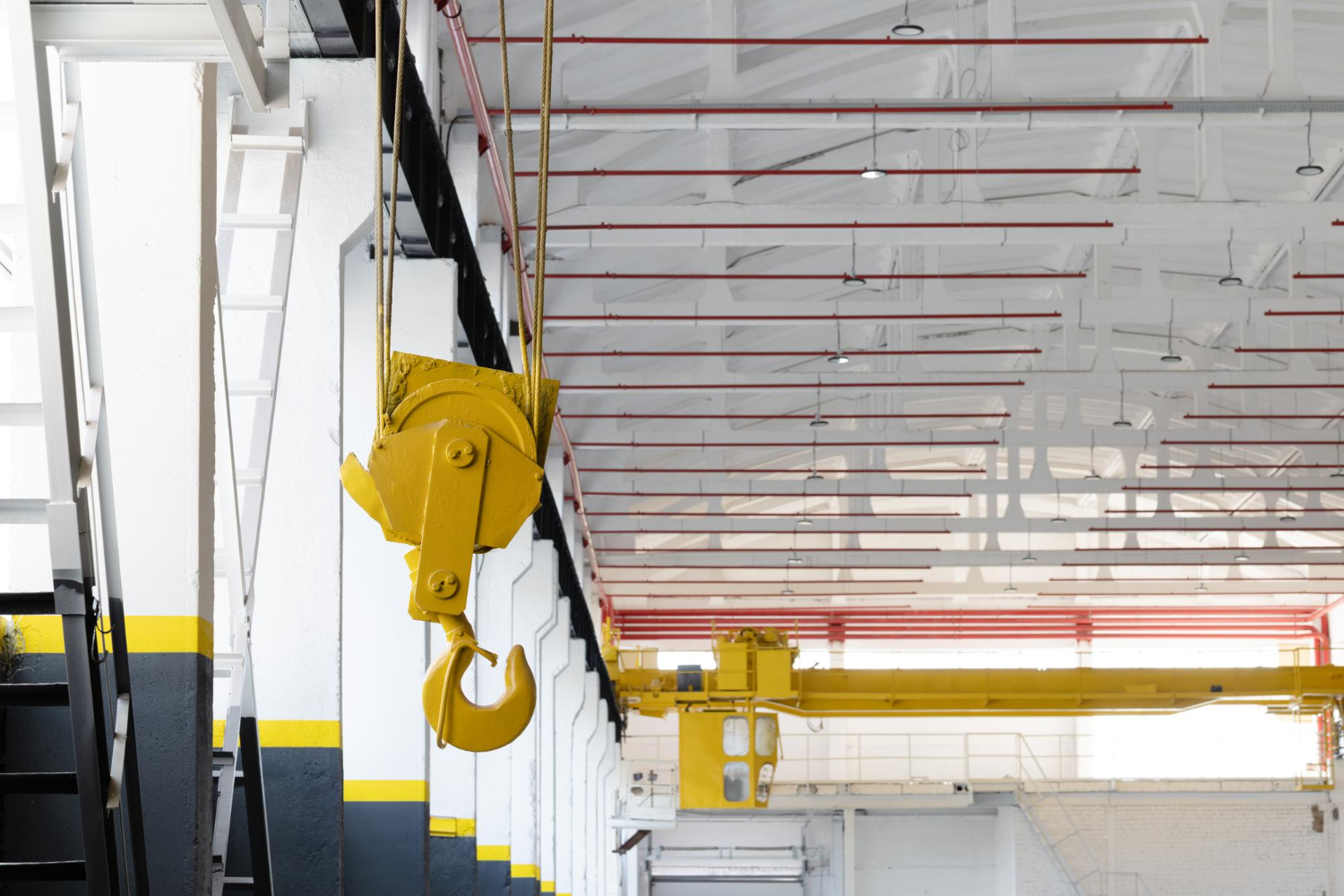
Reducing Unplanned Gearbox Failures in Peak Season
Gearbox reliability on overhead, gantry, and bridge cranes is not a nice-to-have; it is a production requirement. When crane utilization spikes in late summer and duty cycles stay high for longer shifts, the gearbox is often the first point of stress. If it fails, everything behind it backs up, from melt shops and roll lines to paper machines, ports, and distribution centers.
Unplanned crane outages tied to gearbox problems can hit output, shipping dates, and safety performance at the same time. Production slows or stops, trucks wait longer, inventory piles up, and teams are pushed into rushed repair work, often at odd hours. On top of that, there is added exposure for riggers and maintenance staff working around suspended loads while the system behaves unpredictably.
For heavy manufacturing, steel, paper, port operations, and large logistics sites, the goal is clear: keep gearboxes running safely between planned overhauls. We see three primary levers that actually move the needle in the field: good condition monitoring, strong lubrication control, and disciplined management of load and duty cycle. When these are aligned with OEM guidance and regulatory requirements, crane gearboxes last longer without sacrificing safety margins.
Translating Condition Monitoring Signals Into Actionable Insights
Condition monitoring is only useful if it leads to clear decisions. Many plants collect vibration, oil, and temperature data, but the real value comes from knowing what is normal, what is an early warning, and what is a red flag that should trigger industrial gearbox repair planning.
Key tools for crane gearboxes include:
- Vibration analysis, looking at gear mesh frequencies, sidebands, and bearing fault signatures
- Oil analysis, focusing on particle counts, wear metals, viscosity, water, and oxidation
- Thermal trending, monitoring how operating temperature changes with load and ambient conditions
Different failure modes leave different fingerprints:
- Micro-pitting and scuffing often show as increasing high-frequency vibration and slight changes in oil particle counts before visible tooth damage
- Misalignment and looseness show up as elevated vibration at running speed and harmonics, sometimes with uneven temperature patterns across the housing
- Bearing spalling and brinelling produce distinct bearing defect frequencies and rising wear metals in the oil
- Shaft bending or deflection can drive abnormal vibration at 1× or 2× running speed and can be tied to overloads or structural issues
For high-duty cranes with frequent heavy lifts, monthly vibration routes are a practical baseline. Lower-duty cranes may justify quarterly checks, as long as the environment is not especially dirty or hot. Many plants choose at least quarterly oil analysis, then increase to monthly when they see early wear or high contamination.
The key is to define action thresholds before the busy season. For example:
- Level 1: Condition change, increase monitoring frequency and review operating practices
- Level 2: Clear fault development, plan detailed inspection or partial teardown at the next available window
- Level 3: Imminent failure risk, schedule industrial gearbox repair or replacement at the earliest safe opportunity
When those thresholds are linked to work orders, outage planning, and spare gearbox strategies, condition data stops being noise and becomes a real predictive maintenance tool.
Lubrication Strategies That Delay the Next Overhaul
Even a well-designed gearbox will suffer if the oil is wrong for the job. Crane gearboxes often see variable loads, shock loading, and high ambient temperatures, especially in late summer around hot processes or in poorly ventilated bays. Incorrect viscosity, the wrong base oil type, or an incompatible additive package can turn those conditions into rapid wear.
Sound lubrication practice starts with:
- Oil selection that matches OEM recommendations for viscosity and type
- Seasonal viscosity adjustments when ambient temperatures vary widely
- Correct oil fill levels and regular checks so gears and bearings are not starved or churning through foam
- Proper breathers and desiccant filters to limit moisture and airborne dust
- Filtration targets aligned with ISO cleanliness codes that suit the gearbox design and duty cycle
After any overload event or major repair, a drain-and-flush helps remove debris or machining residue that would otherwise circulate through the gear mesh. Oil analysis results then turn into a control loop. If labs show rising oxidation, water contamination, or additive depletion, it may be time to shorten drain intervals, correct a sealing issue, or address breathing problems. If the oil stays clean and stable, intervals can often be safely extended in line with OEM and safety guidelines.
Done well, this approach delays the need for a full overhaul while still keeping bearing surfaces, gear teeth, and seals in good condition. It also supports warranty expectations, since decisions are tied back to data and OEM-compatible products.
Managing Load, Duty Cycle, and Operation to Protect Gearboxes
Mechanical design assumes certain limits. When cranes are repeatedly run beyond those limits, gearboxes pay the price. Overload events and severe shock loads can cause tooth root fatigue, bearing brinelling, and shaft deflection. Even if nothing breaks that day, damage accumulates and shows up later as noise, heat, or vibration.
Several operating practices directly affect gearbox life:
- Accurate crane load monitoring so operators know the true load, not just a guess
- Limits and training to avoid side pulls and off-center lifts that twist the drivetrain
- Careful tuning of drives and controls so acceleration and deceleration ramps do not slam the system
- Avoiding stacking peak usage, like multiple maximum-capacity lifts back-to-back in high ambient heat
Here, production and maintenance need to work as one team. Systems already in place often have useful data: load cells, drive logs, and control diagnostics. When those are reviewed together, it becomes easier to spot patterns like frequent close-to-capacity lifts, frequent overload trips, or aggressive jog moves. Adjusting procedures or control parameters based on this data can remove a lot of abuse-related damage without reducing overall throughput.
Leveraging Engineered Service and Modernization for Longer Life
Over time, the best results come from pairing daily operating discipline with engineered improvements. Careful inspection can reveal weak points in sealing, bearing selection, cooling, or gear material that are repeatedly driving failures. Targeted upgrades can then be used to address those weak points instead of living with the same patterns year after year.
Common upgrade paths include:
- Improved sealing to protect against moisture and dust
- Bearing upgrades tailored to actual loads and speeds
- Gear material or surface treatment changes that handle real site conditions better
- Cooling improvements or control changes that reduce thermal stress
Working with an industrial gearbox repair specialist also helps during rebuilds and overhauls. Precision alignment, attention to gear contact patterns, correct bearing fits, and controlled assembly procedures all have a direct impact on vibration levels and long-term life. When emergency support, consistent repair standards, and maintained spare assemblies are in place, mean-time-to-repair drops. At the same time, condition-based overhaul planning reduces the chance that a failure will hit during peak shipping or production periods.
Turning Gearbox Data Into a Proactive Reliability Program
Extending crane gearbox life between overhauls is not about one single tool or product. It comes from a closed-loop strategy that links condition monitoring, disciplined lubrication, and thoughtful load management into one reliability program.
A practical path forward is to start with a baseline gearbox condition audit before demand peaks, then:
- Define monitoring methods, frequencies, and thresholds by crane and duty class
- Standardize lubrication products, intervals, and cleanliness targets across similar assets
- Review operating practices, load patterns, and control settings with both operations and maintenance present
From there, gearboxes shift from being an unpredictable source of downtime to controlled, predictable assets that support production schedules. At Zeller Technologies, we focus on helping industrial crane users do exactly that through engineered service, modernization recommendations, and predictive maintenance support that keeps gearboxes reliable over the long term.
Get Started With Your Project Today
If your operation is facing downtime or performance issues, our technicians are ready to help restore your equipment quickly and safely. Learn how our specialized industrial gearbox repair services can extend asset life and reduce unplanned outages. At Zeller Technologies, we work closely with your team to assess the problem and recommend the most efficient path forward. To discuss your timeline or request a quote, please contact us today.