
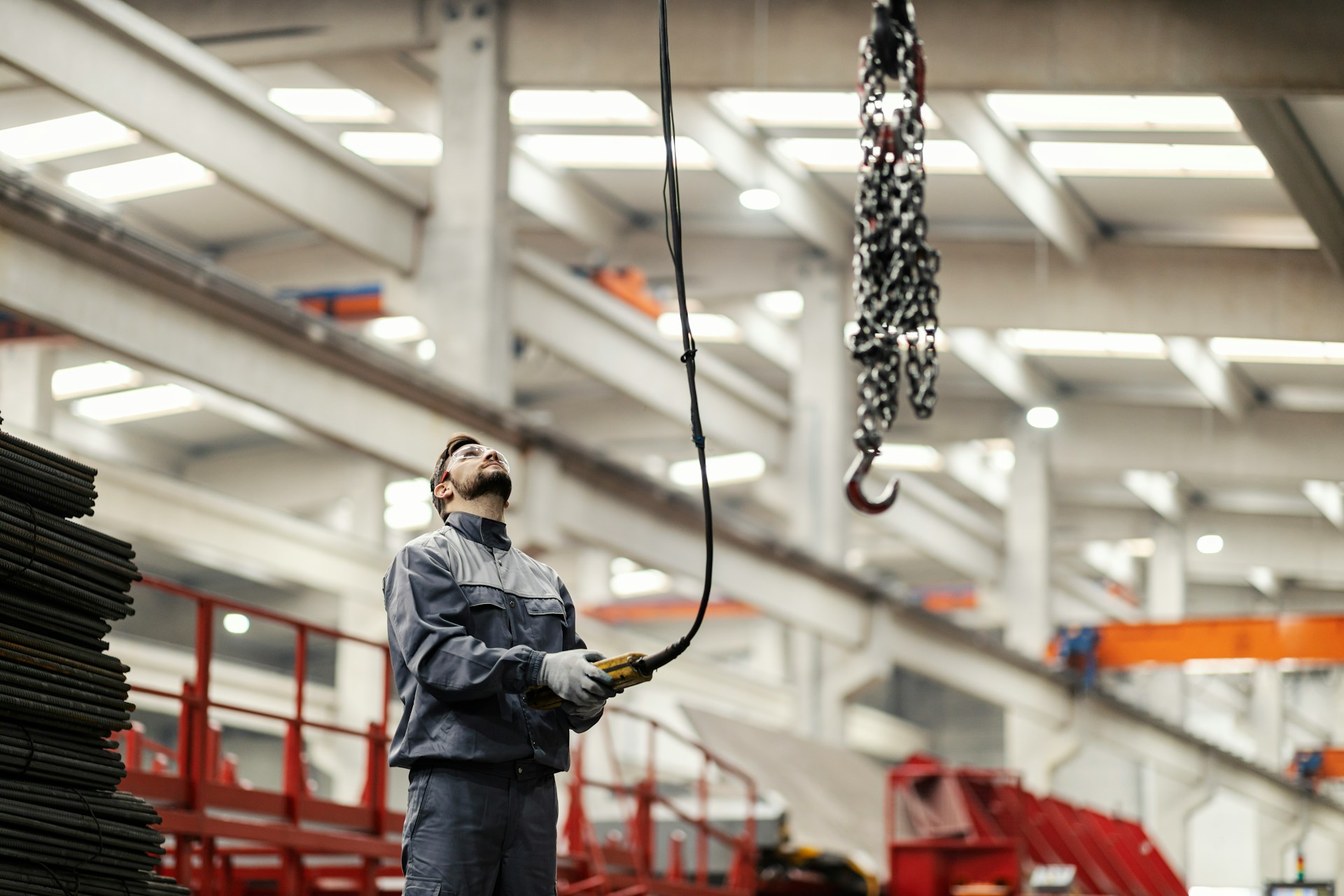
Engineering Crane Control Panels for Zero-Downtime Operations
High-reliability crane controls are not a nice-to-have when your plant is in peak production. When construction, metals, food and beverage, grain and logistics all push hard, an overhead crane that stops unexpectedly can stall an entire line and stack up trucks in the yard. Controls are usually not the most visible part of the crane, but they are often the first place small issues turn into long outages.
That is where a UL 508A panel shop comes into play. The way a crane control panel is engineered, built and documented has a direct impact on uptime, personnel safety and long-term asset life. A panel that is designed for the actual duty cycle, environment and maintenance practices at your site will run cooler, trip less, and give clearer information when something does go wrong.
For manufacturing and heavy industry across the central United States, a partner that brings together UL 508A compliance, application engineering and field service experience can turn crane controls from a weak link into a steady, predictable part of operations.
Why UL 508A Certification Matters for Crane Control
UL 508A is the standard that defines how industrial control panels are constructed. For crane controls, this covers things like:
- Short-circuit current rating (SCCR) and how the panel will behave in a fault
- Component selection and coordination of breakers, fuses and contactors
- Wiring methods, conductor sizing and overcurrent protection
- Enclosure ratings, spacings and creepage/clearance distances
- Labeling, schematics and documentation packages
These are not just paperwork topics. In a crane or hoist, poor panel design can show up as:
- Dropped or uncontrolled loads from nuisance trips or unclear fault handling
- Electrical faults that damage drives and motors, sometimes repeatedly
- Higher arc flash exposure if SCCR and protective devices are not aligned
- Extended downtime while teams trace unmarked or undocumented wiring
UL 508A gives OEMs, plant engineers and safety teams a baseline of design integrity. It makes it easier to align with OSHA and with NFPA 70 and NFPA 70E requirements around electrical safety and arc flash risk. When inspectors, insurance auditors or corporate safety groups review a crane system, a properly labeled UL 508A panel with a clear SCCR and accurate prints is a strong starting point.
Designing a High-Reliability UL 508A Panel Shop Workflow
A high-performing UL 508A panel shop does more than pick listed components. It runs an engineering workflow that ties the crane duty and environment to every design choice.
Key steps usually include:
- Application review, including load charts, duty class and cycles per hour
- Load and duty-cycle analysis for the hoist, bridge and trolley motions
- Control philosophy definition, for example PLC-based, relay logic or hybrid
- Device specification for drives, contactors, brakes, feedback and safety devices
Certain design practices have an outsized impact on crane reliability, especially in hot summer conditions:
- Conservative de-rating of drives, transformers and power supplies for high ambient temperature and enclosed spaces
- Enclosure selection that accounts for mills, foundries, grain dust or washdown, with attention to cooling and filtration
- Careful handling of line harmonics, inrush current and braking energy for large hoist motors and frequent starts
Inside the panel shop, documented processes matter. Standard layout practices, clear segregation of power and control, and consistent grounding methods all reduce noise issues and troubleshooting time. Quality checkpoints such as factory acceptance testing, functional simulations and, where appropriate, load testing with motors or drive stands help catch problems before the panel reaches the crane.
Advanced Control Architectures for Modern Crane Systems
Modern crane control architecture looks very different from older contactor-only panels. Variable frequency drives (VFDs) for hoist and travel, paired with smart control logic, allow:
- Smooth acceleration and deceleration for better load control
- Anti-sway functions that reduce pendulum motion
- Closed-loop feedback from encoders or resolvers for precise positioning
- Reduced mechanical shock on gearboxes, wheels and runways
With this added capability comes a stronger need for safety integration. Within the UL 508A framework, safety-rated hardware is planned into the design rather than tacked on later. This often includes:
- Safety relays or safety PLCs for e-stops and gate switches
- SIL or Performance Level (PL) rated limit switches and position devices
- Zone control and speed limits to protect walkways or work cells
- Safe torque off (STO) functions in VFDs where appropriate
Networked control topologies are now common. EtherNet/IP, Profinet, wireless pendants and remote I/O reduce wiring and open the door for diagnostics, but they also add new failure modes. A UL 508A panel shop that understands these networks will address:
- Segmentation of control and plant networks
- Managed switches and diagnostic LEDs brought to the door
- Clear addressing and naming standards for field devices
- Provisions for remote access under your plant’s cybersecurity rules
The goal is not only to move the load, but to do it with predictable behavior, clear alarms and maintainable code and hardware.
Built-in Maintainability and Predictive Insights
A crane that is hard to troubleshoot tends to stay down longer. Panel design can make life easier for maintenance teams if it includes:
- Clear device labeling that matches the schematics and the field tags
- Segregated power and control wiring to reduce noise and confusion
- Generous terminal space for test leads and safe work practices
- Schematics and panel layouts that match the as-built condition
Beyond basic maintainability, a UL 508A panel shop can design in instrumentation that supports predictive maintenance. Common elements include:
- Current transformers and power meters for hoist and travel drives
- Vibration and temperature sensing on motors and gearboxes
- Brake wear or brake torque monitoring
- Encoder and limit feedback brought back to the PLC or drive
When tied into plant systems, this data can support condition-based maintenance and more focused inspections. For a service company that also provides motors, cranes and predictive maintenance, these design features allow remote diagnostics, faster fault finding during 24/7 emergencies and smarter long-term planning for component replacement.
Modernization Strategies for Legacy Crane Panels
Many plants still run cranes with older controls that do not meet modern UL 508A practices. Upgrading these systems starts with a clear view of risk. Typical steps include:
- Electrical risk assessment that considers both process and personnel safety
- Alignment with existing or new arc flash studies
- Verification of available fault current and panel SCCR
- Review of crane duty, load profiles and production impact of outages
From there, several modernization paths are possible:
- Drop-in UL 508A control panels that reuse existing mechanical structures and motors, often with improved component coordination
- Stepwise retrofits that add drives or PLC control to specific motions while keeping some legacy hardware
- Full modernization with new drives, PLC, safety I/O and network architecture that can report directly into plant MES or SCADA systems
The business case often rests on reduced nuisance trips, fewer heat-related failures during hot months, extended motor and gearbox life and better integration with central monitoring systems, all while avoiding long shutdown windows.
Turning Panel Design Into a Reliability Advantage
When a crane control panel is treated as a commodity, reliability usually suffers. When it is treated as a strategic asset, built by a UL 508A panel shop that understands crane and hoist duty cycles, harsh industrial environments and safety expectations, it becomes a strong point in the system instead of a weak link.
Engineering and maintenance leaders evaluating partners should look at factors such as the scope of the UL file, crane-specific project references, in-house testing capabilities and the ability to support both new builds and modernization projects. A provider that can design, build and then service those panels in the field brings a closed loop between theory and real-world operation that is especially valuable for plants across the central United States that depend on cranes every day.
Get Started With Your Project Today
If you are looking for a trusted partner to design and build compliant industrial control panels, our team at Zeller Technologies is ready to help. As a certified UL 508A panel shop, we work with you to deliver reliable, safe, and efficient control solutions tailored to your application. Share your project requirements and we will collaborate with your engineering and operations teams to move from concept to commissioning with confidence. To discuss timelines, specifications, or next steps, contact us today.